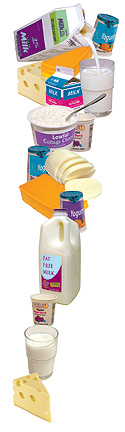
The dairy group includes foods that are made from milk and are also high in calcium (a nutrient that builds strong bones). If you're lactose-intolerant, special milk products can help. If you're allergic to dairy or vegan, be sure to get your calcium from leafy greens, such as spinach, kale, or collard greens, and from calcium-fortified foods, such as orange juice and soy products.
Nutrient-rich choices
It's best to choose low-fat or nonfat dairy products. Nutrient-rich choices include:
-
Milk (low-fat or nonfat). Milk contains the nutrients calcium, potassium, vitamins A and D, and protein.
-
Low-fat or nonfat cheese, cottage cheese, and yogurt.
-
Foods made with these products, such as cream of broccoli soup made with nonfat milk or quesadillas made with low-fat cheese.
What makes dairy less healthy?
-
Many dairy products are high in fat. Always look for low-fat or nonfat varieties. You can ease into this. If you drink whole milk now, make the move to 2% milk first, then to nonfat or low-fat (1%) milk.
-
Most cheeses are high in fat. If you select a cheese with a strong taste, you may eat less than you would of a milder cheese. Also look for low-fat cheese or cheese made with part skim milk.
-
Added sugar, such as in ice cream and frozen yogurt, makes dairy products less healthy. Compare food labels to find brands lower in fat, added sugar, and calories.
One small change
Drink low-fat or nonfat milk with at least one meal each day. Have a better idea? Write it here:
_____________________________________________________________
Online Medical Reviewer: Daphne Pierce-Smith RN MSN
Online Medical Reviewer: Raymond Turley Jr PA-C
Online Medical Reviewer: Shaziya Allarakha MD
Date Last Reviewed: 04/01/2025
© 2000-2025 The StayWell Company, LLC. All rights reserved. This information is not intended as a substitute for professional medical care. Always follow your healthcare professional's instructions.
Find the right provider to meet your needs
From primary care to specialty services and more.
Find a Doctor
Call for an Appointment
Offering personalized care at more than 20 clinics across three cities and two states.
Call NowRelated Articles
Low-Salt Diet
A low-salt diet removes foods that are high in salt. It also limits the amount of salt you use when cooking. Read on to see what foods and drinks you can have on this diet.
Low-Fiber Diet
A low-fiber diet means eating foods that don't have much fiber. They are easy to digest. Learn why your provider may put you on this kind of diet-and what foods you can and can't eat.
Discharge Instructions: Eating a Low-Potassium Diet
People who have certain kidney problems may be told to follow a low-potassium diet. This sheet can help you get started.
Add Variety to Your Vegetables
Vegetables offer not only a variety of flavors and textures--they are also packed with nutrients. But many Americans limit their vegetable consumption to just a few types.