The venom from most spiders isn't poisonous to people. But a spider bite can cause a local skin reaction. This often causes local redness, itching, and swelling. This reaction will fade over a few hours to a few days. A spider bite can become infected, so watch for the signs listed below. Sometimes it's hard to tell the difference between a local reaction to the insect bite or sting and an early infection. So your healthcare provider may start you on antibiotics.
Home care
The following guidelines will help you care for your wound at home:
-
Stay away from anything that heats up your skin if itching is a problem. This includes hot showers or baths or direct sunlight. This will make the itching worse.
-
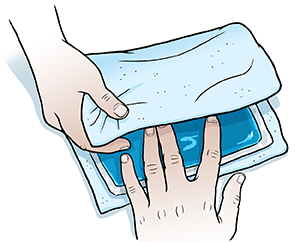
During the first 24 hours, you may put an ice pack on the injury. Use it for no more than 20 minutes at a time every 1 to 2 hours. This will reduce pain and swelling. It will also help with itching. You can make an ice pack by putting ice cubes in a plastic bag that seals at the top. Wrap the bag in a thin, clean towel. Don't put ice or an ice pack directly on the skin. You may also use an over-the-counter spray or cream containing benzocaine to help ease pain. Over-the-counter skin creams containing diphenhydramine or hydrocortisone may help with itching. Remember to review the medicine instructions for any allergies.
-
If the wound becomes red, wash the area with soap and water every day. Put an antibiotic cream or ointment on the injury 3 times a day as advised.
-
If your healthcare provider has prescribed oral antibiotics, take them as directed until they are all finished.
Follow-up care
Follow up with your healthcare provider, or as advised.
When to get medical advice
Call your healthcare provider right away if any of these occur:
-
Spreading areas of itching, redness, or swelling
-
Pain or swelling that gets worse
-
Fever of 100.4ºF (38ºC) or higher, or as advised by your provider
-
Fluid leaking from the wound
-
You get a skin sore (skin ulcer)
-
A red streak in the skin leading away from the wound
-
You still have symptoms after 3 days
-
Generalized rash, fever, or joint pain starting 1 to 2 weeks after treatment
Call 911
Call
-
New or worse swelling in the face, eyelids, lips, mouth, throat, or tongue
-
Hard time swallowing or breathing
-
Dizziness, weakness, or fainting
Online Medical Reviewer: Eric Perez MD
Online Medical Reviewer: Jessica Gotwals RN BSN MPH
Online Medical Reviewer: Paula Goode RN BSN MSN
Date Last Reviewed: 09/01/2024
© 2000-2025 The StayWell Company, LLC. All rights reserved. This information is not intended as a substitute for professional medical care. Always follow your healthcare professional's instructions.
Convenient Care When You Need It
San Juan Health Partners Urgent Care is here for you with walk-in care for life’s urgent matters.
Find Urgent Care
Call for an Appointment
Offering personalized care at more than 20 clinics across three cities and two states.
Call NowRelated Articles
Animal Bites and Scratches
Most bites and scratches from household pets are nothing to worry about. But some bites or scratches can be serious. Others may become infected or pose the risk of rabies. So it's best to talk with your health care provider or get medical care.
Hip Bruise
A hip contusion can cause swelling, pain, and changes in skin color. Here's how to care for yourself at home.
Tick Bites
Learn all about tick bites, including removing a tick, common symptoms of tick-borne diseases, and when to get medical help after a bite.
First Aid: Puncture Wounds
A break in the skin is an open door, inviting dirt and germs to enter your body and cause infection. Follow these instructions to care for a puncture in the skin.