Covering a break in the skin helps to control bleeding and protect against infection. Dressings are pads of gauze or cloth that can be placed directly against the wound to absorb blood and other fluids. Cloth bandages cover dressings and hold them in place.
Always wash your hands before and after applying a bandage.
Step 1. Dress the wound
-
Put on gloves or use other protection to prevent contact with the victim's blood.
-
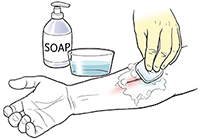
Clean the wound with mild soap and water. Avoid getting soap directly into the wound.
-
Do not use toxic solutions like hydrogen peroxide. They can irritate the wound and are harmful to wound healing.
-
In cases where there are no known allergies, antibiotic ointments may be used. Apply a thin layer of topical antibiotic if desired.
-
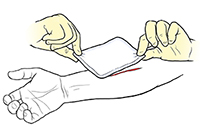
Place a clean dressing over the entire wound. Nonstick dressings have a special surface that won't cling to the wound.
-
If blood soaks through the dressing, place another dressing over the first one.
Step 2. Cover the dressing
-
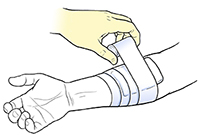
Wrap roller gauze or cloth strips over the dressing and around the wound several times.
-
Extend the bandage at least an inch beyond both sides of the dressing.
-
Don't wrap the bandage so tight that it interferes with blood flow to healthy tissue.
Step 3. Secure the bandage
-
Tie or tape the bandage in place.
-
Don't secure the bandage so tight that fingers or toes become pale or blue.
Step 4. Check circulation
-
Check circulation on the side of the injury that is furthest away from the heart after several minutes and again after several hours. If circulation is poor, the skin may look pale or blue or feel cold. Signs of poor circulation also include numbness and tingling.
-
If circulation is reduced, loosen the bandage right away. If symptoms continue, get medical care.
Online Medical Reviewer: Chris Southard RN
Online Medical Reviewer: Tara Novick BSN MSN
Online Medical Reviewer: Vinita Wadhawan Researcher
Date Last Reviewed: 02/01/2025
© 2000-2025 The StayWell Company, LLC. All rights reserved. This information is not intended as a substitute for professional medical care. Always follow your healthcare professional's instructions.
Convenient Care When You Need It
San Juan Health Partners Urgent Care is here for you with walk-in care for life’s urgent matters.
Find Urgent Care
Call for an Appointment
Offering personalized care at more than 20 clinics across three cities and two states.
Call NowRelated Articles
Hypothermia Treatment
Hypothermia occurs when body temperature falls below 95°F (35°C). This is due to prolonged exposure to cold. Untreated, hypothermia can be fatal. The goal of treatment is to prevent further heat loss and rewarm the body.
Choking First Aid (1 Year and Older)
Detailed information on choking, choking prevention, and doing abdominal thrusts to treat someone who is choking.
Insect, Spider, and Scorpion Bites and Stings
Most insect bites are harmless and cause only minor swelling or itching. But if you're allergic to insects, such as wasps or bees, a sting can cause a life-threatening allergic reaction. The venom (poison) from scorpions and certain spiders can also be deadly, although this is rare. Knowing when to get emergency care could save your life.
Cold Injury First Aid
Learn how to care for yourself at home as you recover from frostbite or frostnip.