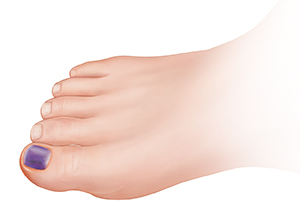
The big toe is the one most often injured, and this can result in a black-and-blue nail. Bruised, broken blood vessels cause the black and blue colors under the nail. This may occur due to repetitive injuries. If you had a sudden injury, your toe can be very painful.
How are black-and-blue nails diagnosed?
Your health care provider will talk with you about your symptoms and physical activities. They may press the area at the end of the toe to determine the extent of pain. Your toe and foot will be examined for any signs of infection. If a fracture or a bone spur is suspected, X-rays may be needed. If small black spots are present under the nail, more tests may be done to rule out other problems.
Treatment for black-and-blue nails
If your pain is severe, your health care provider may remove the nail. Or they may drill a hole in the nail to let the fluid drain from underneath. This relieves the pressure. A local anesthetic (numbing medicine) may be used first. Pain may also be relieved with prescription medicines. Soaking or icing the area may also help. If the pain is not severe, you may not need treatment. The nail can be thinned or left alone to fall off on its own. A new nail should grow to replace it.
Preventing black-and-blue nails
You can prevent many nail problems by wearing the right shoes and trimming your nails properly. To help prevent infection, keep your feet clean and dry. If you have diabetes, talk with your health care provider before doing any foot self-care.
-
The right shoes. Get your feet measured (your size may change as you age). Wear shoes that are supportive and roomy enough for your toes to wiggle. Look for shoes made of natural materials such as leather, which let your feet breathe.
-
Proper trimming. To prevent problems, trim your toenails straight across without cutting down into the corners. If you can’t trim your own nails, ask a provider to do so for you.
Online Medical Reviewer: Marianne Fraser MSN RN
Online Medical Reviewer: Raymond Turley Jr PA-C
Online Medical Reviewer: Shaziya Allarakha MD
Date Last Reviewed: 02/01/2025
© 2000-2025 The StayWell Company, LLC. All rights reserved. This information is not intended as a substitute for professional medical care. Always follow your healthcare professional's instructions.
Find the right provider to meet your needs
From primary care to specialty services and more.
Find a Doctor
Call for an Appointment
Offering personalized care at more than 20 clinics across three cities and two states.
Call NowRelated Articles
Dermatomyositis
This sheet can help you take care of yourself when you have dermatomyositis.
Staph Infection (MRSA)
Normal staph bacteria are often present on the skin without causing problems, but can cause an infection if they get under it. MRSA bacteria are more aggressive than common staph bacteria, and are resistant to common antibiotics.
Understanding Molluscum Contagiosum
Molluscum contagiosum is a skin infection caused by a virus. It causes small bumps on the body. Children and young adults are most often affected.
Plantar Warts
Warts on the soles of the feet are called plantar warts. These warts are not a serious health problem. They usually go away without treatment.