Pulmonary rehabilitation (rehab) programs help people with chronic lung problems breathe better. They help improve a person's overall health and strength. The programs are led by healthcare providers trained to treat people with lung disease. With their help, you’ll learn about your condition. You'll gain skills to help you manage it. Pulmonary rehab can help people of all ages, including adults age 70 and older.
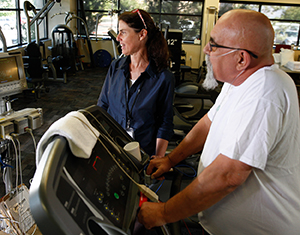
What to expect
Pulmonary rehab programs include:
-
Exercise. This is to help you increase your endurance, strength, and flexibility. For example:
-
You may walk. You may ride a stationary bike. You may do exercises in a chair.
-
You may be taught stretches to do before and after exercise.
-
You may use weights to build strength.
-
Your pulse, heart rate, and oxygen levels may be checked as you exercise.
-
-
Education. You'll learn about your lung problem and how to stay as healthy as possible.
-
Self-management. You'll learn about nutrition, medicines, oxygen, and other tools.
-
Counseling. This is to give you emotional support and help you learn problem-solving skills.
-
Help to stop smoking. If you smoke, you'll have help and support to quit.
Benefits
Pulmonary rehab will help you:
-
Do more of the things you enjoy
-
Improve your strength and sense of well-being
-
Be more independent
-
Do daily activities, such as household tasks, with less shortness of breath
-
Manage your symptoms and medicines
-
Have fewer emergency room visits and less time in the hospital
-
Deal with shortness of breath
-
Quit smoking. This is the most significant change you can make for your health.
-
Get answers to your healthcare questions
-
Set and meet realistic self-management goals
Online Medical Reviewer: Daphne Pierce-Smith RN MSN
Online Medical Reviewer: David A Kaufman MD
Online Medical Reviewer: Marianne Fraser MSN RN
Date Last Reviewed: 03/01/2024
© 2000-2025 The StayWell Company, LLC. All rights reserved. This information is not intended as a substitute for professional medical care. Always follow your healthcare professional's instructions.
Find the right provider to meet your needs
From primary care to specialty services and more.
Find a Doctor
Call for an Appointment
Offering personalized care at more than 20 clinics across three cities and two states.
Call NowRelated Articles
Traveling with Oxygen
Using oxygen doesn't mean you can't travel. You just need to plan ahead. Read on for helpful tips to get you started.
Problems with Thinking Skills After Brain Injury
After a brain injury, a person may be less able to coordinate sequential activities, process thought, and use language. At first, therapy may be provided by medical professionals and therapists. But often longer-term support by family and friends is needed. Read on to learn more.
Pursed-Lip Breathing
Pursed-lip breathing can help you get more oxygen into your lungs when you're short of breath. Learn how and when to do it.
Controlling Asthma Triggers: Animals
You may notice you have asthma and allergy problems when you are around certain animals. Having allergies to animals can trigger asthma flare-ups. The allergy is to an animal's dander (dry skin flakes), feathers, droppings, and saliva.