A hernia bulge may appear suddenly, but hernias often take months or years to develop. They grow larger as pressure inside the body presses the intestines or other tissues out through a weak area in the belly (abdominal) wall. This is often at the belly button or a site of a past surgery. With time, these tissues can bulge out beneath the skin.
Stages of hernia development
The wall weakens or tears: The abdominal lining bulges out through a weak area and begins to form a hernia sac. The sac may contain fat, intestine, or other tissues. At this point, the hernia may not cause a visible bulge.
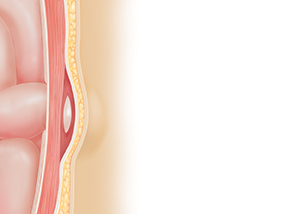
The intestine pushes into the sac: As the intestine pushes farther into the sac, it forms a visible bulge. The bulge may flatten when you lie down or push against it. This is called a reducible hernia. It does not cause any immediate danger.
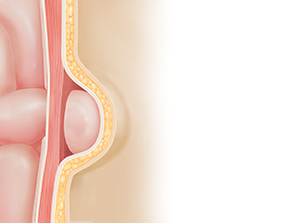
The intestine may become trapped: The sac containing the intestine may become trapped by muscle (incarcerated). If this happens, you won’t be able to flatten the bulge. You may also have pain. You may need prompt treatment.
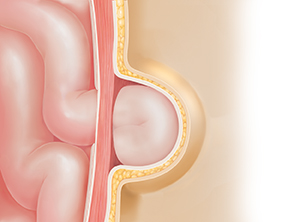
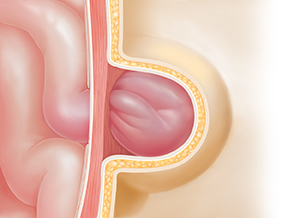
The intestine may become strangulated: If the intestine is tightly trapped, it becomes strangulated. The strangulated area loses blood supply and may die. This can cause severe pain and block the intestine. You need emergency surgery.
Date Last Reviewed: 04/01/2024
© 2000-2025 The StayWell Company, LLC. All rights reserved. This information is not intended as a substitute for professional medical care. Always follow your healthcare professional's instructions.
Find the right provider to meet your needs
From primary care to specialty services and more.
Find a Doctor
Call for an Appointment
Offering personalized care at more than 20 clinics across three cities and two states.
Call NowRelated Articles
Food Poisoning (Foodborne Illness)
Foodborne disease occurs when foods aren't cooked, handled, or stored correctly and become contaminated with harmful bacteria, viruses, parasites, or toxins (poisons). Foodborne disease can cause severe vomiting, diarrhea, and stomach cramps. Symptoms may not appear for 24 to 48 hours.
Crohn’s Disease
Crohn's disease is inflammation of the intestinal tract that comes and goes in flare-ups. Crohn's disease is a form of inflammatory bowel disease.
The Digestive Process: What Does the Small Intestine Do?
At 20 feet long, your small intestine is the longest part of the human digestive system. Most of the digestive process takes place there.
Understanding Colitis
Colitis is when a part of your colon becomes inflamed or swollen. Colitis can be caused by infections, certain medicines, and inflammatory bowel disease.