Your loved one may need ongoing therapy or nursing care after a stroke. Talk with a social worker or case manager. They can help with planning for care. They can tell you about local sources of support.
Planning for home care
-
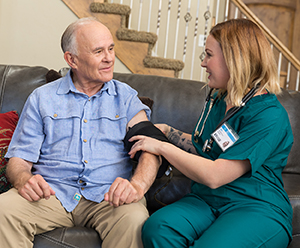
A nurse may come and check their blood pressure.
-
A physical therapist may help with exercises. The therapist will often show your loved one and their family members certain exercises that can be done without supervision.
-
Speech and occupational therapists can help the whole family communicate and handle tasks of daily living better.
Adult daycare
You may be afraid to leave your loved one alone. Adult daycare facilities can provide supervision if you need time away during the day. They also give your loved one a chance to be with other people.
Other resources
You can also check the internet for other resources. Try the following listings:
-
Churches and synagogues
-
Recreation centers
-
Adult daycare
-
Social services
-
Support groups
-
Online stroke support communities
Online Medical Reviewer: Anne Fetterman RN BSN
Online Medical Reviewer: Deepak Sudheendra MD
Online Medical Reviewer: Raymond Kent Turley BSN MSN RN
Date Last Reviewed: 06/01/2025
© 2000-2025 The StayWell Company, LLC. All rights reserved. This information is not intended as a substitute for professional medical care. Always follow your healthcare professional's instructions.
Find the right provider to meet your needs
From primary care to specialty services and more.
Find a Doctor
Call for an Appointment
Offering personalized care at more than 20 clinics across three cities and two states.
Call NowRelated Articles
Good Positioning After a Stroke
Many people who have a stroke have problems with the arm and leg on one side of their body. Good positioning after a stroke can help treat problems with your affected arm, leg, and vision. It can also help prevent new problems from developing.
Preventing Recurrent Stroke: Eating Healthy
Eating healthy foods helps lower cholesterol levels and reduce plaque buildup in arteries. It can also help you lose weight and keep high blood pressure under control.
Stroke: Taking Medicines
Your doctor has given you medications to reduce the risk of a stroke. But they won't help unless you take them as prescribed. This sheet explains why and how to take your medications.
Effects of a Stroke on the Brain and Body
When blood supply is cut off from the brain, cells start to die from lack of oxygen. Within minutes, skills such as reasoning, speech, and movement of the arm, leg, or face may be affected. The type of skills and the amount of loss depend on which part of the brain was affected, and how much tissue was damaged.