Nasal allergies (also called allergic rhinitis) are a common health problem. They may be seasonal. This means they cause symptoms only at certain times of the year. Or they may be perennial. This means they cause symptoms all year long. Other health problems, such as asthma, often occur along with allergies as well.
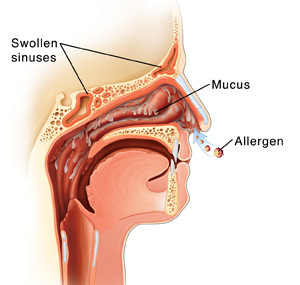
What is an allergen?
An allergy is a reaction to a substance called an allergen. Common allergens include:
-
Wind-borne pollen (from grass, trees, ragweed)
-
Mold
-
Dust mites
-
Furry and feathered animals
-
Pests, such as cockroaches or rodents in a home or other building
Normally allergens are harmless. But when a person has allergies, the body thinks these allergens are harmful. The body then attacks allergens with antibodies. Allergy antibodies are attached to special cells called mast cells. Allergens stick to the antibodies. This makes the mast cells release histamine and other chemicals. This is an allergic reaction. The chemicals irritate nearby nasal tissue. This causes nasal allergy symptoms. When this happens in the breathing tubes of the lungs, it can cause asthma symptoms, such as cough and wheeze.
Common nasal allergy symptoms
Allergies can cause nasal tissue to swell. This makes the air passages smaller. The nose may feel stuffed up or itchy. The nose may also make extra mucus. This can plug the nasal passages or drip out of the nose. Mucus can drip down the back of the throat (postnasal drip) as well. Sinus tissue can swell. This may cause pain and headache. Common allergy symptoms include:
-
Runny nose with clear, watery discharge
-
Stuffy nose (nasal congestion)
-
Drainage down your throat (postnasal drip)
-
Sneezing
-
Red, watery eyes
-
Itchy nose, eyes, ears, and throat
-
Plugged-up ears (ear congestion)
-
Sore throat
-
Coughing
-
Sinus pain and swelling
-
Headache
It may not be allergies
Other health problems can cause symptoms like those of nasal allergies. These include:
-
Nonallergic rhinitis and viruses, such as colds
-
Irritants and pollutants such as strong odors or smoke
-
Common home cleaning products, especially if they have strong odors
-
Certain medicines
-
Changes in the weather
Treatment
Your healthcare provider will evaluate you to find the cause of your symptoms. Then they'll advise treatment. If your symptoms are caused by nasal allergies, your provider may prescribe nasal steroid sprays or antihistamines taken by mouth (oral) to help reduce symptoms. Staying away from the allergen will also be advised. You may also be referred to an allergist. An allergist is a healthcare provider who specializes in diagnosing and treating asthma and other allergic diseases.
Online Medical Reviewer: Dan Brennan MD
Online Medical Reviewer: Marianne Fraser MSN RN
Online Medical Reviewer: Rita Sather RN
Date Last Reviewed: 03/01/2024
© 2000-2025 The StayWell Company, LLC. All rights reserved. This information is not intended as a substitute for professional medical care. Always follow your healthcare professional's instructions.
Find the right provider to meet your needs
From primary care to specialty services and more.
Find a Doctor
Call for an Appointment
Offering personalized care at more than 20 clinics across three cities and two states.
Call NowRelated Articles
Understanding Chickenpox
Chickenpox is a viral illness that spreads very easily from person to person. The virus that causes chickenpox can stay in the body after the illness and later cause shingles. Learn about its symptoms and how it's treated.
Understanding Cold Sores
Cold sores are small blisters or sores on the lip or sometimes inside the mouth. Learn what causes them, their symptoms, and how to prevent them.
COVID-19: Vaccines and Prevention
The best prevention is to not have contact with the COVID-19 virus. Read on about vaccines and other ways to protect yourself and others.
Staph Infection (MRSA)
Normal staph bacteria are often present on the skin without causing problems, but can cause an infection if they get under it. MRSA bacteria are more aggressive than common staph bacteria, and are resistant to common antibiotics.