Correct fitting helps you use your walker safely and effectively. When fitting your walker, stand up straight and wear the shoes you'll normally use to walk. If your walker doesn’t feel right, ask your healthcare provider, nurse, or physical therapist (PT) to check the fit.
Getting to know your walker
A walker is often used for injuries involving the leg or hip. It may also be used for nerve or muscle problems that affect balance. A walker gives more stability than crutches. Some walkers have wheels, others don't. Your healthcare provider will help you choose the best type of walker for your needs. Follow any special instructions you are given.
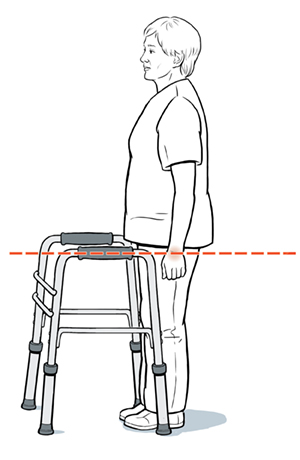
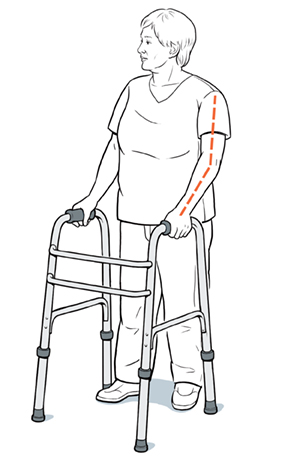
A walker fits if:
-
Your wrists are even with the hand grips when your arms hang at your sides.
-
Your arms are slightly bent at the elbows when your hands are on the grips.
Follow these safety steps
-
If your walker doesn't have wheels, it should have nonskid rubber tips to prevent slipping. Change tips that look worn or become uneven.
-
If your walker has wheels, talk with your healthcare provider or PT if the walker doesn't have a smooth glide.
-
If you're using a folding walker, be sure you know how to lock it open. Check that it’s locked open before use.
-
Keep all 4 legs of the walker at the same length.
-
Wear shoes with non-skid or rubber soles.
-
Don't wear shoes with heels or leather soles.
-
Keep your back straight. Don’t hunch over the walker.
Online Medical Reviewer: Daphne Pierce-Smith RN MSN
Online Medical Reviewer: Raymond Turley Jr PA-C
Online Medical Reviewer: Thomas N Joseph MD
Date Last Reviewed: 10/01/2024
© 2000-2025 The StayWell Company, LLC. All rights reserved. This information is not intended as a substitute for professional medical care. Always follow your healthcare professional's instructions.
Find the right provider to meet your needs
From primary care to specialty services and more.
Find a Doctor
Call for an Appointment
Offering personalized care at more than 20 clinics across three cities and two states.
Call NowRelated Articles
Leg Muscle Stretches: Knee Flexion
The following flexibility exercise may be suggested by your therapist. Repeat as many times as instructed. Stop the exercise if it causes pain, and discuss it with your physical therapist or healthcare provider:
Back Safety: Turning
Protect your back while you stand or turn. Turning can twist your spine if you don't do it correctly.
Foot and Ankle Exercises: Ankle Circles
Ankle circles are designed to stretch and strengthen your feet and ankles.
Self-Care for Strains and Sprains
Most minor strains and sprains can be treated with self-care. But if you have torn tissue or damaged blood vessels, nerves, or bones, be sure to call your healthcare provider.