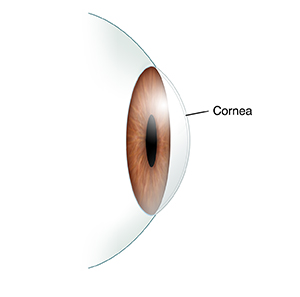
A corneal ulcer is an open sore on your cornea. In most cases, it’s caused by an infection. The cornea is a clear layer on the front of your eye. It helps protect your eye from dirt and germs. It also helps control how light enters your eye. Infection or injury to your cornea can cause an ulcer to form. Corneal ulcers can happen in people of any age. If not treated, a corneal ulcer can lead to loss of eyesight and even blindness.
What causes a corneal ulcer?
Many things can cause a corneal ulcer. These include:
-
Bacterial infections, such as Staphylococcus
-
Viral infections, such as herpes
-
Fungal infections
-
Parasitic infections
-
Scrapes or burns on the cornea
-
Conditions that dry out the cornea, such as dry eye or Bell’s palsy
-
Autoimmune diseases, such as rheumatoid arthritis
-
Injury to the cornea
-
Ulcers from reduced blood flow, such as from diabetes
-
Allergies causing inflammation of the eyes
-
Vitamin A deficiency (rare in the U.S.)
If you use contact lenses, you are more at risk for a corneal ulcer if you:
-
Wear soft contact lenses
-
Wear extended-wear contact lenses
-
Wear your lenses for longer than recommended
-
Don’t care for your lenses and lens case as directed
-
Put your contact lenses in water
Symptoms of a corneal ulcer
Symptoms of a corneal ulcer can include:
-
Severe eye pain
-
A feeling of something in your eye
-
Tearing
-
Discharge from your eye
-
Sensitivity to light
-
Blurred or reduced vision
-
Eye redness
-
Swelling of your eyelids
-
A white spot on your cornea that may not be seen in a mirror
Diagnosing a corneal ulcer
You may see an eye healthcare provider who will ask about your past health history and your symptoms. You will be given an eye exam in both eyes. A dye may be put on the surface of your eye to help your eye healthcare provider look at your cornea. You may be asked to look into a large tool called a slit-lamp to examine your eye in more detail.
Your cornea may be scraped, and the sample sent to a lab to check for infection. If you wear contact lenses, your contact lenses may be sent to the lab too. You may also have blood tests to help find the cause of your corneal ulcer. Your treatment may vary depending on the cause.
Online Medical Reviewer: Chris Haupert MD
Online Medical Reviewer: Tara Novick BSN MSN
Online Medical Reviewer: Whitney Seltman MD
Date Last Reviewed: 12/01/2022
© 2000-2025 The StayWell Company, LLC. All rights reserved. This information is not intended as a substitute for professional medical care. Always follow your healthcare professional's instructions.
Find the right provider to meet your needs
From primary care to specialty services and more.
Find a Doctor
Call for an Appointment
Offering personalized care at more than 20 clinics across three cities and two states.
Call NowRelated Articles
Conjunctivitis, Allergic
Allergic conjunctivitis is caused by an allergen. Symptoms may include redness of the eye, swelling, fluid leakage, and itching or burning.
Uveitis
Uveitis is inflammation inside the eye. This can be caused by injury to the eye or disease somewhere else in the body. Symptoms include eye pain, redness, blurred vision, sensitivity to light, and floating spots in the vision.
Meibomian Gland Blockage
The meibomian glands are small glands located inside the upper and lower eyelids. They secrete oils that work with tears. If your meibomian glands become blocked by thickened oils, your eyes will become dry. Your eyes may feel irritated.
Ptosis
Ptosis is when the upper eyelid droops down more than it should. If the ptosis is severe, it may block vision.