Sublingual immunotherapy is a treatment that may help with your allergies. It's sometimes called SLIT. It may ease your symptoms if you are allergic to dust mites, grass, or ragweed. An allergen is any substance that causes an allergic reaction.
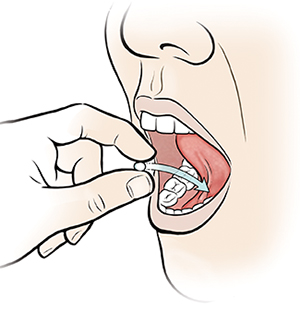
Sublingual means under the tongue. It refers to how you do the treatment. You put a small dose of allergen, in the form of a tablet, under your tongue.
Why sublingual immunotherapy is done
This treatment helps ease your allergies by giving small amounts of an allergen to you over time. Your body should start to build up a tolerance to the allergen. As a result, symptoms such as a runny nose, itchy eyes, or congestion may greatly improve or may even go away completely.
This treatment can be done in place of allergy shots. After the first dose, you may not have to see your health care provider for each dose. Discuss this choice with your provider. Dosing must be done daily and is usually done at home. The treatment is considered safe with mild side effects that can usually be easily treated.
How sublingual immunotherapy is done
Your first dose is done with your health care provider. This is so the provider can watch you for any signs of a severe allergic reaction. You will have to stay in the office for at least 30 minutes after you take the dose. If there are no problems, you will likely be able to take future doses by yourself.
-
Place the tablet under your tongue.
-
Wait for the tablet to dissolve, about 1 to 2 minutes. You can then swallow.
-
Don’t drink or eat anything for at least 5 minutes after a dose.
-
You may have some minor reactions, such as itching or swelling in your mouth or stomach problems. These symptoms should improve over time as you take each dose.
-
Give yourself a dose once a day or as often as your provider tells you to. For the best results, you may need to do this for several years.
This therapy is often started about 3 months before allergy season. Talk with your provider about what you should do if you miss a dose. If you have asthma, don’t take a dose if your asthma isn’t under control. Talk to your provider for more instructions.
Risks of sublingual immunotherapy
-
Mouth or throat problems, such as itching, swelling, or ulcers
-
Heartburn or trouble swallowing
-
Severe allergic reaction. An anaphylactic reaction is usually rare but could happen. Ask your health care provider if you need to carry epinephrine.
Author: Semko, Laura
Online Medical Reviewer: Jessica Gotwals RN BSN MPH
Online Medical Reviewer: Marianne Fraser MSN RN
Date Last Reviewed: 04/01/2025
© 2000-2025 The StayWell Company, LLC. All rights reserved. This information is not intended as a substitute for professional medical care. Always follow your healthcare professional's instructions.
Find the right provider to meet your needs
From primary care to specialty services and more.
Find a Doctor
Call for an Appointment
Offering personalized care at more than 20 clinics across three cities and two states.
Call NowRelated Articles
Take Care with Nasal Decongestant Sprays
A medicated nasal decongestant spray may offer fast relief when your nose is congested and running. But using them for too long can cause problems. Learn about some other options, as well as how to treat young children.
Nasal Allergy: Over-the-Counter Medicines
A helpful look at the most common over-the-counter medicines that treat allergies.
Using Over-the-Counter Allergy Medicines
Keep these guidelines in mind when looking for allergy relief.
Seasonal Tips to Ease Allergy Symptoms
Pollen and mold allergies can bring a range of uncomfortable symptoms, including a runny nose and itchy throat. But these allergens aren’t the only ones to disrupt daily life—other common substances can also trigger allergy-like symptoms. Try these tips to feel better and enjoy yourself no matter the season.