What is genital herpes?
Genital herpes is a sexually transmitted disease. It is caused by the herpes simplex virus (HSV). Herpes infections can cause blisters and ulcers on the mouth or face (oral herpes). They can also cause sores in the genital area (genital herpes). HSV is a lifelong infection.
Symptoms of genital herpes
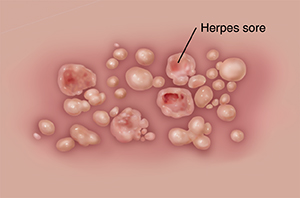
Symptoms may include painful blisters or open sores in the genital area. They may tingle or itch. Before these symptoms appear, you may feel a tingling or burning feeling in your legs, buttocks, or genital area. The herpes sores often go away within a few weeks. But the virus stays in the body. The sores may come back from time to time.
How does genital HSV affect pregnancy?
It's important not to get herpes during pregnancy. A first flare-up during pregnancy raises the risk of spreading it to your newborn. You may be treated with an antiviral medicine such as acyclovir if the disease is severe. The disease can cause a possibly fatal infection in your baby if you have active genital herpes (shedding the virus) at the time of birth. Cesarean delivery is often recommended for active genital herpes. Fortunately, infection of a baby is rare among women with genital herpes.
Preventing transmission of herpes
It's important not to have sex when you have symptoms of active herpes. Also use latex condoms between outbreaks.
Date Last Reviewed: 08/01/2023
© 2000-2025 The StayWell Company, LLC. All rights reserved. This information is not intended as a substitute for professional medical care. Always follow your healthcare professional's instructions.
Find the right provider to meet your needs
From primary care to specialty services and more.
Find a Doctor
Call for an Appointment
Offering personalized care at more than 20 clinics across three cities and two states.
Call NowRelated Articles
Chorionic Villus Sampling (CVS)
This prenatal test involves taking a sample of tissue from the placenta to test for chromosomal abnormalities and certain other genetic problems.
Bloodborne Pathogens: If You're Exposed
Bloodborne pathogens are disease-causing germs carried in blood or other body fluids. If blood or body fluids have touched your eyes, mouth, nose, or any other opening or break in your skin, you've been involved in an exposure incident. Here's what you need to know.
Sickle Cell Disease and Pregnancy
How sickle cell disease affects pregnancy depends on whether you have sickle cell disease or sickle cell trait. Read on to learn more.
If You Think You Have an STI
If you think you have an STI, getting a diagnosis and starting treatment right away is important.