Food labels
When you read food labels, it helps to know what the words really mean. The terms are based on one serving size. So it's important to read the nutrition label because a food container (jar, bottle, can, bag) may have more than one serving. Here are some definitions of common food label terms.
|
If a label says . . . |
It means . . . |
|
Calorie free |
Less than 5 calories per serving |
|
Low calorie |
40 calories or less per serving |
|
Fat free |
Less than ½ g fat per serving |
|
Low fat |
3 g or less fat per serving |
|
Sugar free |
Less than ½ g sugar per serving |
|
Cholesterol free |
Less than 2 mg cholesterol and 2 g or less saturated fat per serving |
|
Low cholesterol |
20 mg or less cholesterol and 2 g or less saturated fat per serving |
|
Reduced |
At least 25% less of a certain nutrient or calories than the regular product |
|
Low sodium |
140 mg or less sodium per serving |
|
High fiber |
5 g or more fiber per serving |
|
High in |
20% or more of the daily value of a certain nutrient per serving |
|
Good source of |
10% to 19% of the daily value of a certain nutrient per serving |
Good nutrition means more than eating an apple a day. Think in terms of your food choices throughout the entire day, from breakfast to bedtime. All foods can fit into a healthy eating plan.
Good nutrition basics
Remember these key points:
-
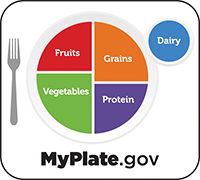
Balance. Eat a mix of different types of food. Make half your plate fruits and vegetables. Then fill your plate with one-quarter protein and one-quarter whole grains.
-
Variety. Choose a wide range of foods of different colors.
-
Flexibility. Find an eating plan that fits your schedule and tastes.
-
Moderation. Don't eat too much of any one food. For most of your meals, drinks, and snacks, choose those lower in added sugars, saturated fat, and sodium.
Online Medical Reviewer: Brittany Poulson MDA RDN CD CDE
Online Medical Reviewer: Diane Horowitz MD
Online Medical Reviewer: Heather M Trevino BSN RNC
Date Last Reviewed: 05/01/2025
© 2000-2025 The StayWell Company, LLC. All rights reserved. This information is not intended as a substitute for professional medical care. Always follow your healthcare professional's instructions.
Find the right provider to meet your needs
From primary care to specialty services and more.
Find a Doctor
Call for an Appointment
Offering personalized care at more than 20 clinics across three cities and two states.
Call NowRelated Articles
Low-Salt Diet
A low-salt diet removes foods that are high in salt. It also limits the amount of salt you use when cooking. Read on to see what foods and drinks you can have on this diet.
Understanding Fat and Cholesterol
Too much cholesterol in your blood can lead to blocked arteries. Eating foods that contain cholesterol can raise your blood cholesterol. Planning meals that are low in cholesterol and saturated fat helps reduce the level of cholesterol in your blood. Try to eat less than 200 mg of cholesterol a day.
Metabolic Syndrome: Managing Salt
A key way to reduce the effects of metabolic syndrome is to lower high blood pressure. Reducing the amount of salt (sodium) in your diet is a great start.
Low-Fiber Diet
A low-fiber diet means eating foods that don't have much fiber. They are easy to digest. Learn why your provider may put you on this kind of diet-and what foods you can and can't eat.