Standard precautions include the basic infection control measures that must be used in patient care all the time. These measures apply to any environment where healthcare is given, whether the patient's infection status is suspected or confirmed. These precautions not only facilitate patient recovery, they also protect the healthcare staff and other caregivers from getting ill due to infections. Follow your employer’s guidelines for cleaning up articles and surfaces that may spread germs. To use standard precautions, follow the guidelines below.
Handling laundry
-
Protect your hands, mouth, eyes, and clothing. Wear gloves, a mask, and a gown if needed. Wear ear protectors and protect yourself from heat exhaustion in the laundry room.
-
Be alert for hidden sharps.
-
Never shake out laundry. Hold soiled laundry away from your body to prevent contaminating your clothing. Be especially careful to hold contaminated laundry away from your body in case any sharps in the laundry puncture the bag.
-
Put soiled laundry right into the approved container. Don't put it down on any surface. Place wet laundry in leak-proof bags. Bag contaminated laundry at the location of use. Don't sort or rinse laundry at the location where it was used as this could spread contamination.
Cleaning patient rooms
-
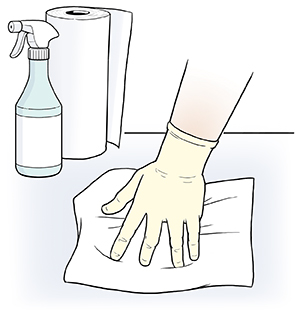
Clean any surface, object, or equipment that a patient might touch. This includes bedside tables, bed rails, telephones, call bells, doorknobs, bathrooms, and light switches.
-
Clean and disinfect bins and pails. Empty trash containers.
Safe housekeeping
-
Wear the right personal protective equipment (PPE) for the job. Cleaning may need special gloves. Follow your facility’s guidelines. If fluids or dust may splash or spray, wear an apron, gown, mask, goggles, face shield, and/or shoe covers.
-
Know the basic ingredients of each cleaning solution you use in your work. Never mix solutions together if they contain ammonia and chlorine, as they will form a very dangerous gas.
-
Clean up spills of blood and other body fluids or substances carefully. Use a spill kit, if provided. Use disinfectant approved by your facility.
-
Throw out all “single use” items after one use. Place used needles and other sharps in marked sharps containers.
-
Don't pick up glass with your hands, even if you’re wearing gloves. Use tongs or a broom and pan.
-
Always wash your hands after removing gloves. Wash your hands well with soap and water or use a suitable alcohol-based preparation to keep germs off your hands.
Guidelines for nondisposable equipment
-
Each patient should have their own patient care equipment. If this is not possible, items must be cleaned between patients.
-
Thoroughly clean all equipment and other items that touch the patient.
-
Use approved disinfectant. Follow the product’s guidelines to allow time for the disinfectant to work before wiping or rinsing.
Online Medical Reviewer: Heather M Trevino BSN RNC
Online Medical Reviewer: Marianne Fraser MSN RN
Online Medical Reviewer: Shaziya Allarakha MD
Date Last Reviewed: 08/01/2024
© 2000-2025 The StayWell Company, LLC. All rights reserved. This information is not intended as a substitute for professional medical care. Always follow your healthcare professional's instructions.
Find the right provider to meet your needs
From primary care to specialty services and more.
Find a Doctor
Call for an Appointment
Offering personalized care at more than 20 clinics across three cities and two states.
Call NowRelated Articles
Work-Related Musculoskeletal Disorders (WMSDs): Identifying the Risks
It's important to know the risk factors for developing a work-related musculoskeletal disorder (WMSD). You can't prevent this type of injury unless you can identify the cause.
Tips for Working Parents: Child Care
Read on for helpful tips about finding a child-care provider--as well as safety tips for kids who are home alone.
Understanding Container Labels and Hazardous Chemicals
You can help prevent illness and injury by reading the container label for each hazardous substance you use.
Reducing Risk of Musculoskeletal Disorders: Posture at Your Workstation
Having correct posture reduces strain on soft tissues. When you're in neutral position, your bone structure supports you and provides a stable base to move from. To stay close to neutral, try these tips.