Urinary retention means you are having trouble urinating. In some cases you may not be able to pass any urine at all. This condition occurs even though your bladder is full.
Causes
For girls and women, the most common cause of urinary retention is a bladder infection. Certain medicines can also cause this problem. So can changes in the body, such as uterine prolapse and severe constipation.
Symptoms
Some people have no symptoms. For others, common symptoms include:
-
Bladder or lower-belly pain or fullness
-
Belly swelling
-
Nausea or vomiting
-
Back pain
-
Frequent urination
-
Feeling that the bladder is still full after urinating
-
Not being able to control the release of urine (incontinence)
Treatment
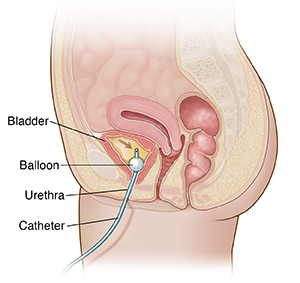
This condition is treated by putting a tube (catheter) into the bladder to drain the urine. This gives relief right away. The catheter may need to stay in place for a few days. The catheter has a balloon on the tip. This is inflated after the catheter is put in the bladder. This prevents the catheter from falling out.
Home care
-
If you were given antibiotics to treat a bladder infection, take them until they are used up. Or take them until your healthcare provider tells you to stop. It's important to finish the antibiotics even if you feel better. This is to make sure your infection has cleared.
-
If a catheter was left in place, it's important to keep bacteria from getting into the collection bag. Don't disconnect the catheter from the collection bag.
-
Use a leg band to secure the drainage tube so it does not pull on the catheter. Drain the collection bag when it becomes full, using the drain spout at the bottom of the bag.
-
Don't pull on or try to take out your catheter. This will harm your urethra. The catheter must be removed by a healthcare provider.
Follow-up care
Follow up with your healthcare provider, or as advised.
If a catheter was left in place, it can often be removed in 3 to 7 days. Some conditions require that the catheter stays in longer. Your provider will tell you when to come back to have the catheter removed.
When to get medical advice
Call your healthcare provider right away if any of these occur:
-
Fever of 100.4ºF (38ºC) or higher, or as directed by your provider
-
Bladder or lower-belly pain or fullness
-
Belly swelling, nausea, vomiting, or back pain
-
Blood or urine leakage around the catheter
-
Bloody urine coming from the catheter (if a new symptom)
-
Weakness, dizziness, or fainting
-
Confusion or change in normal level of alertness
-
If you have a catheter, see your provider if the catheter:
-
Falls out
-
Stops draining for 6 hours
-
Online Medical Reviewer: Donna Freeborn PhD CNM FNP
Online Medical Reviewer: Marc Greenstein MD
Online Medical Reviewer: Raymond Kent Turley BSN MSN RN
Date Last Reviewed: 11/01/2022
© 2000-2025 The StayWell Company, LLC. All rights reserved. This information is not intended as a substitute for professional medical care. Always follow your healthcare professional's instructions.
Personalized Services Just for You
San Juan Health Partners Urology. Compassionate care you can trust.
Find a Doctor
Call for an Appointment
Offering personalized care at more than 20 clinics across three cities and two states.
Call NowRelated Articles
What Is Interstitial Cystitis?
Interstitial cystitis (IC) is a chronic and painful condition of the bladder. People with IC have a bladder wall that is tender and easily irritated, leading to uncomfortable symptoms. Although IC currently has no cure, the symptoms can be managed to help you feel better and live more comfortably.
Kidney Problems
Kidney damage can be temporary or permanent, depending on what caused it. Here are some reasons why kidneys may fail.
Dysuria With Uncertain Cause (Adult)
The urethra is the tube that allows urine to pass out of the body. Dysuria is the feeling of pain or burning in the urethra when you pass urine. Here's what you should know about caring for yourself at home.
Dysuria
Dysuria is when you have pain when peeing. It's often described as a burning feeling. Learn more about this problem and how it can be treated.