By lowering high blood pressure, you can reduce the amount of damage to your kidneys and help slow any progression of kidney disease. Visit your healthcare provider as scheduled and follow the tips below.
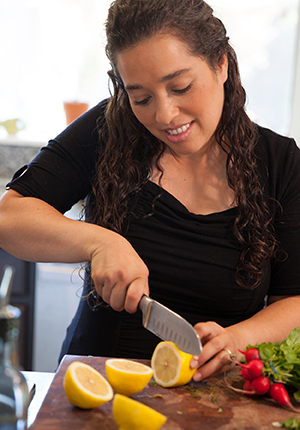
Eat right
To control blood pressure and kidney disease:
-
Limit salt (sodium) intake. Your sodium limit is 1,500 mg a day. Sodium makes up 40% of table salt, which is also called sodium chloride. So 1,500 mg of sodium equals 3,800 mg of salt. It's very important to read and understand this difference when reading food labels. The following is a general guide that will make it easy to understand how much sodium is in different amounts of salt:
-
¼ teaspoon salt = 600 mg sodium
-
½ teaspoon salt = 1,200 mg sodium
-
¾ teaspoon salt = 1,800 mg sodium
-
1 teaspoon salt = 2,400 mg sodium
-
-
Cook with spices and herbs instead of salt.
-
Eat fresh foods instead of canned or processed ones.
-
Eat less fat. Avoid fats that come from animal sources.
-
Choose low-fat dairy foods.
You may also need to
-
Eat less protein.
-
Drink less fluid.
-
Eat foods that are low in phosphorus and potassium.
Stay active
Regular activity helps reduce high blood pressure. For best results:
-
Talk with your healthcare provider before starting a fitness program. Your provider may be able to suggest activities that will help you feel your best.
-
Ask your healthcare provider how often you should exercise and for how long.
-
Try to exercise at the same time each day.
-
Don't get discouraged if you can't be very active at first. Even a little activity is better than doing nothing. The important thing is to stick with it.
-
Ask a friend or family member to exercise with you. Many people find companionship the best incentive to keep a regular exercise schedule.
Online Medical Reviewer: Marianne Fraser MSN RN
Online Medical Reviewer: Raymond Kent Turley BSN MSN RN
Online Medical Reviewer: Walead Latif MD
Date Last Reviewed: 12/01/2022
© 2000-2025 The StayWell Company, LLC. All rights reserved. This information is not intended as a substitute for professional medical care. Always follow your healthcare professional's instructions.
Personalized Pediatric Care
San Juan Health Partners Pediatrics. Dedicated to caring for your children.
Find a Doctor
Personalized Services Just for You
San Juan Health Partners Urology. Compassionate care you can trust.
Find a Doctor
Call for an Appointment
Offering personalized care at more than 20 clinics across three cities and two states.
Call NowRelated Articles
Kidney Disease: Getting the Right Amount of Protein
If your kidneys can't filter wastes from your blood normally, the BUN (blood urea nitrogen) level increases. If the level gets too high, you can become sick. Because of this, you need to control the amount of protein you eat each day. Use this handout to help you.
Caring for Your PD Catheter and Exit Site
Your healthcare provider will teach you how to care for your catheter and exit site. Good care is important to prevent infection. If an infection occurs, the catheter may have to be taken out. A new one will have to be put in at a later date.
Kidney Disease: Understanding Fluids
Healthy kidneys balance the amount of fluid that enters and leaves the body. If your kidneys can't maintain this fluid balance, you may need to limit your fluid intake.
Chronic Kidney Disease (CKD)
When the kidneys don't work normally and waste products start to build up in the blood, this is called chronic kidney disease (CKD). Read on to learn how to care for yourself at home.