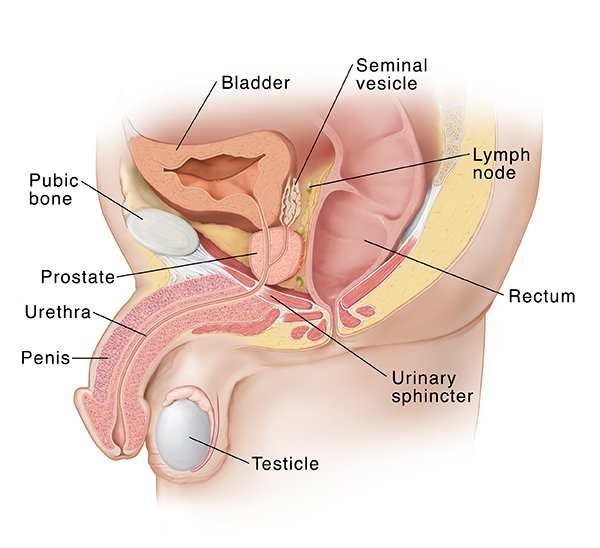
The prostate gland is part of the reproductive system for people who are assigned male at birth. The prostate is located below the bladder. It surrounds the tube (the urethra) that carries urine and semen out of the body. The prostate makes fluid. This fluid mixes with fluid from the seminal vesicles and sperm from the testicles to form semen. During ejaculation, semen goes through the urethra and out of the penis. Prostate health is closely linked to hormones. These are chemicals that carry messages all over the body. Normal levels of hormones, such as testosterone, keep the prostate working correctly.
Featured in
Online Medical Reviewer: Donna Freeborn PhD CNM FNP
Online Medical Reviewer: Marc Greenstein MD
Online Medical Reviewer: Raymond Kent Turley BSN MSN RN
Date Last Reviewed: 08/01/2023
© 2000-2025 The StayWell Company, LLC. All rights reserved. This information is not intended as a substitute for professional medical care. Always follow your healthcare professional's instructions.
Personalized Services Just for You
San Juan Health Partners Urology. Compassionate care you can trust.
Find a Doctor
Call for an Appointment
Offering personalized care at more than 20 clinics across three cities and two states.
Call NowRelated Articles
Adult Circumcision
Circumcision is a procedure to remove the foreskin, the loose fold of skin that covers the head of the penis. Read on to learn more about adult circumcision and how it's done.
Male Reproductive Anatomy
A diagram and explanation of the main parts of the male reproductive anatomy.
Laparoscopic Varicocelectomy
Varicocelectomy is surgery to fix a varicocele. A varicocele is swelling of veins in the scrotum. This swelling is due to blood backing up in the veins.
Transurethral Resection of the Prostate (TURP): Home Recovery
Take it easy for the first month or so while you heal. During the first few weeks, you may feel burning when you pass urine. You may also feel like you have to urinate often. These sensations will go away. If your urine becomes bright red, it means that the treated area is bleeding. This may happen on and off for a month or so after a TURP. If this occurs, rest and drink plenty of fluids until the bleeding stops.