A bruise (contusion) is a soft-tissue injury. A bruise occurs when small blood vessels near the surface of the skin are damaged. This causes blood to leak out under the skin. An external genital contusion is most often due to a bump, blow, or fall. Symptoms include pain or soreness and swelling. The bruise will cause skin discoloration. As it heals, it will likely turn from red, purple, blue, or greenish coloring to a light yellow. This is normal.
In general, no tests are required. If your injury seems to be severe, an imaging test may be done to check the extent of the damage. Most bruises heal without treatment in about 1 to 2 weeks.
Home care
-
You may be given medicines to ease pain and swelling. Take these medicines as directed by your healthcare provider.
-
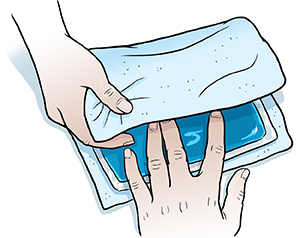
Apply an ice pack to the injured area. To make an ice pack, put ice cubes in a plastic bag that seals at the top. Wrap the bag in a thin, clean towel. (Never put ice or an ice pack directly on your skin.) Do this 3 to 4 times a day for 15 to 20 minutes at a time, or as advised. After a few days, you may use a heating pad instead of an ice pack if that feels better.
-
Don't have sex or do any straddling activities such as biking or horseback riding until your healthcare provider says it’s OK. If sitting is uncomfortable, sit on a doughnut-shaped pillow or other soft item.
-
Don't lift heavy objects until symptoms are better.
-
If walking hurts, use crutches or a cane for a few days until you can walk without pain.
Follow-up care
Follow up with your healthcare provider, or as advised.
When to get medical advice
Call your healthcare provider right away if any of these occur:
-
Fever of 100.4°F (38°C) or higher, or as directed by your healthcare provider
-
Pain or swelling gets worse
-
Skin around the bruise turns very red or feels warm to the touch
-
Bleeding from your vagina not due to your monthly period
-
Blood in your urine, pain during urination, or trouble passing urine
Online Medical Reviewer: Daniel N Sacks MD
Online Medical Reviewer: Donna Freeborn PhD CNM FNP
Online Medical Reviewer: Heather Trevino
Date Last Reviewed: 11/01/2022
© 2000-2025 The StayWell Company, LLC. All rights reserved. This information is not intended as a substitute for professional medical care. Always follow your healthcare professional's instructions.
Convenient Care When You Need It
San Juan Health Partners Urgent Care is here for you with walk-in care for life’s urgent matters.
Find Urgent Care
Call for an Appointment
Offering personalized care at more than 20 clinics across three cities and two states.
Call NowRelated Articles
Animal Bites and Scratches
Most bites and scratches from household pets are nothing to worry about. But some bites or scratches can be serious. Others may become infected or pose the risk of rabies. So it's best to talk with your health care provider or get medical care.
Tick Bites
Learn all about tick bites, including removing a tick, common symptoms of tick-borne diseases, and when to get medical help after a bite.
First Aid: Puncture Wounds
A break in the skin is an open door, inviting dirt and germs to enter your body and cause infection. Follow these instructions to care for a puncture in the skin.
First Aid: Cuts and Scrapes
A break in the skin is an open door, inviting dirt and germs to enter your body and cause infection. Learn how to prevent infection with correct first-aid care.