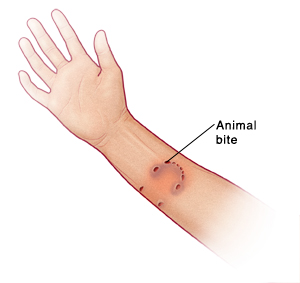
An animal bite can cause a wound deep enough to break the skin. In such cases, the wound is cleaned and then sometimes closed. If the wound is closed, it may not be closed completely. This is so that fluid can drain and prevent the wound from becoming infected. In addition to wound care, a tetanus shot (injection), rabies shot, and antibiotics may be given, if needed.
Home care
-
Care for the wound as directed. If a dressing was applied to the wound, change it as directed.
-
Wash your hands well with soap and warm water before and after caring for the wound. This helps lower the risk of infection.
-
If the wound bleeds, place a clean, soft cloth on the wound. Then, firmly apply pressure until the bleeding stops. This may take up to 5 minutes. Don't release the pressure and look at the wound during this time.
-
Most skin wounds heal within 10 days. An infection can occur even with correct treatment. So be sure to watch the wound for signs of infection (see below). Check the wound as often as directed by your healthcare provider.
-
Antibiotics may be prescribed. These help prevent or treat infection. If you’re given antibiotics, take them as directed. Also, be sure to complete the medicines.
Rabies prevention
Rabies is a virus that can be carried in certain animals. These can include domestic animals such as dogs and cats. Wild animals, such as skunks, raccoons, foxes, and bats, can also carry rabies. Pets fully vaccinated against rabies (2 shots) are at very low risk of infection. But because human rabies is almost always fatal, any biting pet should be confined for 10 days as an extra safety measure. In general, if there's a risk for rabies, these steps may need to be taken:
-
If someone’s pet dog or cat has bitten you, it should be kept in a secure area for the next 10 days to watch for signs of illness. (If the pet owner won’t allow this, contact your local animal control center.) Ask the pet owner for vaccine records if available. If the dog or cat becomes ill or dies during that time, contact your local animal control center immediately so the animal may be tested for rabies. If the pet stays healthy for the next 10 days, there is no danger of rabies in the animal or you.
-
If a stray pet bit you, contact your local animal control center. They can give information on capture, quarantine, and animal rabies testing.
-
If you can’t find the animal that bit you in the next 2 days, and if rabies exists in your region, you may need to receive the rabies vaccine series. Call your healthcare provider right away. Or return to the emergency department right away.
-
All animal bites should be reported to the local animal control center. If you were not given a form to fill out, you can report this yourself.
Follow-up care
Follow up with your healthcare provider as directed.
When to get medical advice
Get medical care right away if any of these occur:
-
Signs of infection:
-
Spreading redness or warmth from the wound
-
Increased pain or swelling
-
Fever of 100.4ºF (38ºC) or higher, or as advised by your provider
-
Colored fluid or pus draining from the wound
-
-
Signs of rabies infection:
-
Headache
-
Confusion
-
Strange behavior
-
Increased salivating and drooling
-
Seizure
-
-
Decreased ability to move any body part near the bite area
-
Bleeding that can't be stopped after 5 minutes of firm pressure
Online Medical Reviewer: Eric Perez MD
Online Medical Reviewer: Paula Goode RN BSN MSN
Online Medical Reviewer: Tara Novick BSN MSN
Date Last Reviewed: 09/01/2024
© 2000-2025 The StayWell Company, LLC. All rights reserved. This information is not intended as a substitute for professional medical care. Always follow your healthcare professional's instructions.
Convenient Care When You Need It
San Juan Health Partners Urgent Care is here for you with walk-in care for life’s urgent matters.
Find Urgent Care
Call for an Appointment
Offering personalized care at more than 20 clinics across three cities and two states.
Call NowRelated Articles
Hypothermia Treatment
Hypothermia occurs when body temperature falls below 95°F (35°C). This is due to prolonged exposure to cold. Untreated, hypothermia can be fatal. The goal of treatment is to prevent further heat loss and rewarm the body.
Reaction to Medicine (Other Type)
A reaction to a medicine can have different symptoms depending on the specific medicine. The reaction can range from very mild to very severe.
First Aid: Bleeding
Call 911 if you can't stop the bleeding or the victim shows signs of shock.
Lip or Mouth Laceration
A laceration is a cut through the skin. A cut on the outside of the lip may be closed with stitches, surgical tape, or skin glue. Cuts inside the mouth may be sutured or left open, depending on the size.