Deep breathing helps keep your lungs clear. If you’ve had surgery, this will help you get better faster. Deep breathing also helps you breathe easier. And it may prevent a lung infection or other complications.
Home care
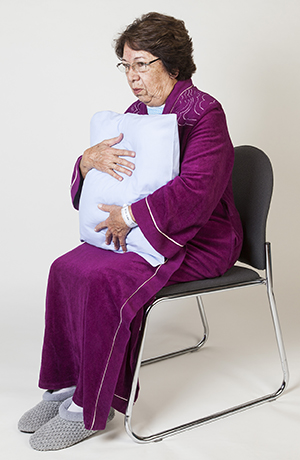
Follow these steps to do deep breathing:
-
Sit on the edge of a bed or a chair. You can also lie on your back with your knees slightly bent.
-
If you've had surgery on or near your chest or belly, hold a pillow or rolled-up towel firmly against your cut (incision) with both hands. Hug the pillow.
-
Breathe out normally.
-
Breathe in deeply through your nose. Feel your stomach push out as you breathe in.
-
Hold your breath for 2 to 5 seconds, if possible.
-
Pucker your lips as you would to blow out a candle.
-
With your lips puckered, breathe out slowly through your mouth. You should feel your chest go down as you breathe out.
-
Rest for a few seconds, breathing normally.
-
Relax your neck and shoulder muscles.
-
Repeat the above steps as many times as directed.
Follow-up
Make a follow-up appointment. Or follow up as directed by your health care provider.
When to get medical care
Contact your health care provider right away if any of these occur:
-
Fever of 100.4°F (38°C) or higher, or as advised by your provider.
-
Signs of infection, if you've had surgery. These include redness, swelling, or warmth at your incision site. These also include pus or fluid draining from the site.
-
Brownish or bloody sputum (mucus).
-
Minor bleeding from surgical site.
-
New cough.
-
Upset stomach (nausea) or vomiting.
-
Increasing pain.
-
Dizziness or weakness.
-
Fast or irregular heartbeat.
Call 911
Shortness of breath may be a sign of a serious health problem. Call
-
Confusion or trouble staying awake
-
Loss of consciousness or fainting
-
Chest pain or tightness
-
Trouble breathing or wheezing
-
Bluish skin or lips
-
Coughing up blood
-
Severe pain
-
Severe bleeding or new opening at surgical site
Online Medical Reviewer: Chris Southard RN
Online Medical Reviewer: Daphne Pierce-Smith RN MSN
Online Medical Reviewer: Shaziya Allarakha MD
Date Last Reviewed: 02/01/2025
© 2000-2025 The StayWell Company, LLC. All rights reserved. This information is not intended as a substitute for professional medical care. Always follow your healthcare professional's instructions.
Expert Surgical Care
San Juan Health Partners General Surgery. Providing personalized treatment options for you.
Learn More
Call for an Appointment
Offering personalized care at more than 20 clinics across three cities and two states.
Call NowRelated Articles
Having Female-to-Male Subcutaneous Mastectomy and Chest Contouring
Subcutaneous mastectomy and chest contouring is done to give a person a more male-looking chest.
Deep Coughing
Deep coughing helps keep your lungs clear. If you've had surgery, this will help you get better faster. It also helps you breathe easier and may prevent a lung infection. Follow these steps to do deep coughing.
Managing Post-Op Pain at Home: Medicines
Pain after an operation (post-op pain) is common and expected. These guidelines can help you stay as comfortable as possible.
Discharge Instructions: Changing Your Dressing
Here are tips to help you take care of your incision when you get home.