Prevention
What You Don’t Know About Skin Cancer Can Hurt You
January 2022
Skin cancer affects more Americans than any other malignancy. In fact, nearly 1 in 5 will develop it. But a new survey finds huge gaps in public knowledge about risk factors.
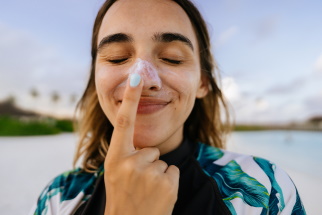
The American Academy of Dermatology recently asked 1,000 U.S. adults basic questions about skin cancer, tanning, and sun protection. About one-third flunked the test.
Among the troubling results:
-
31% did not know tanning causes skin cancer
-
53% weren’t aware shade can protect you from the sun’s harmful rays
-
47% falsely believed having a base tan prevents sunburns, or weren’t sure
The biggest misunderstandings occurred among younger adults. That includes Gen Z—born after 1996—and millennials, those born between 1981 and 1996. Unfortunately, research suggests indoor tanning and sunburns at younger ages increase risk later.
The myth of a healthy glow
Tanned skin is not a sign of vitality. In fact, a bronze hue is the body’s attempt to protect itself. Experts now know nearly all skin cancers result from too much exposure to ultraviolet (UV) light.
Many skin cancers are curable. However, melanoma—the deadliest type—is on the rise. About 106,000 Americans will be diagnosed with melanoma this year. Again, most cases are linked to UV exposure.
Stay skin-safe all year round
The risks don’t go away in fall and winter. Whatever the season, sunburn can still occur on cloudy days. And snow can reflect harmful UV rays.
Many people see tanning beds as a safe source of vitamin D in colder months. An estimated 7.8 million adults use them. But in fact, artificial UV rays from beds and lamps may be even more harmful than natural ones.
To prevent skin cancer, get vitamin D from foods like fatty fish, milk, and orange juice. Wear water-resistant sunscreen with a sun protection factor (SPF) of 30 or higher and broad-spectrum protection, even when it’s cloudy. Prefer a tanned look? Use a self-tanning lotion, foam, or spray instead.
Online Medical Reviewer: Brian McDonough, MD
Online Medical Reviewer: Ray Turley, BSN, RN
Date Last Reviewed: 01/01/2022
© 2000-2025 The StayWell Company, LLC. All rights reserved. This information is not intended as a substitute for professional medical care. Always follow your healthcare professional's instructions.
Find the right provider to meet your needs
From primary care to specialty services and more.
Find a Doctor
Call for an Appointment
Offering personalized care at more than 20 clinics across three cities and two states.
Call NowRelated Articles
Monitoring Moles
Most moles are not cancer and are harmless. But some do become cancer. That's why you need to check the moles on your body.
Moles: Skin Self Check
A helpful, step-by-step guide to doing a monthly skin check and tracking any changes in your moles.
Abrasions
Abrasions are skin scrapes. Their treatment depends on how large and deep the abrasion is. Read on to learn about general care when you are home and when to call the health care provider.
Infected Epidermoid Cyst (Antibiotic Treatment)
An epidermoid cyst is a small, painless lump under your skin. It is not cancer. Sometimes the cyst can get infected. Your cyst became infected, and your health care provider wanted to treat it with antibiotics.