A compartment is a group of muscles, blood vessels, and nerves. This group is enclosed by strong tissue called fascia.
An injury or other problem may cause tissue inside the compartment to swell. Or blood or other fluid may build up. Either can lead to too much pressure inside the compartment. The pressure can quickly damage muscle and other tissues. The condition is an emergency that should be treated with surgery right away.
Compartment syndrome most often affects the legs, arms, feet, hands, and buttocks.
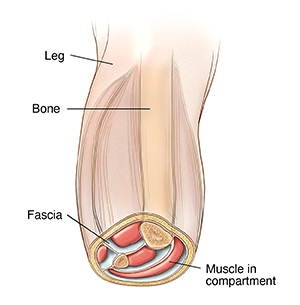
Causes of compartment syndrome
The most common cause is an injury. It's often a major injury, such as a broken bone, crush injury, or severe burn. But more minor injuries can also lead to it. A bandage, splint, or cast put on too tightly can also cause it. In rare cases, causes include animal bites, bleeding disorders, or injecting illegal drugs.
Symptoms of compartment syndrome
Symptoms include:
-
Pain that gets worse quickly.
-
Pain beyond what is expected for the type of injury.
-
Burning or aching felt deep in the muscle.
-
Loss of feeling or numbness.
Treatment for compartment syndrome
Compartment syndrome is an emergency and must be treated as soon as possible. Treatment may include:
-
Having surgery to open up the fascia. This helps relieve the pressure and prevent further tissue damage.
-
Removing a cast, splint, or bandage. This can reduce pressure.
-
Keeping your affected arm or leg level with your heart. This helps reduce pressure.
-
Taking prescription or over-the-counter medicines. They can relieve pain and swelling.
-
Getting extra oxygen. This can help limit tissue damage.
-
Managing blood pressure. This prevents low blood pressure and helps the area get enough circulation.
Possible complications
If compartment syndrome isn’t treated quickly, muscles and nerves can die. Dead muscle can’t be repaired and must be removed. In some cases, you may need surgery to remove the affected body part (amputation).
When to contact your doctor
Contact your provider right away if:
-
You have severe pain or pain that quickly gets worse. This may be hours after the injury.
-
You have pain that doesn't get better after taking pain medicines.
-
You have numbness or tingling in the area.
-
You feel weakness in the affected area.
-
You have problems moving affected muscles.
-
You have new symptoms.
Author: Michels, Karen
Online Medical Reviewer: Raymond Turley Jr PA-C
Online Medical Reviewer: Stacey Wojcik MBA BSN RN
Online Medical Reviewer: Thomas N Joseph MD
Date Last Reviewed: 04/01/2025
© 2000-2025 The StayWell Company, LLC. All rights reserved. This information is not intended as a substitute for professional medical care. Always follow your healthcare professional's instructions.
Find the right provider to meet your needs
From primary care to specialty services and more.
Find a Doctor
Call for an Appointment
Offering personalized care at more than 20 clinics across three cities and two states.
Call NowRelated Articles
Hip Dislocation
A hip dislocation happens when the femur pops out of its socket. Learn what kind of care is needed.
Shoulder Bruise
You have a shoulder injury called a contusion (bruise). This causes pain, swelling, and sometimes bruising on the skin.
Herniated Intervertebral Disc
A herniated disc happens when a spinal disc tears. Read on to learn about home care and general care for this condition.
Understanding Rotator Cuff Tendonitis
The rotator cuff connects the upper arm to the shoulder blade. It gives the shoulder joint stability and strength. Tendonitis happens when the tendons in the shoulder become irritated and swollen.