Spinal disks are gel-filled cushions between the bones, or vertebrae, of the spine. The disks act like shock absorbers. Over time, the disks may break down. This is called degenerative disk disease.
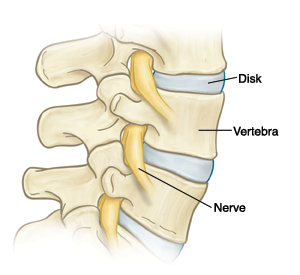
This condition can affect the neck or back. It is one of the most common causes of low back pain. The pain often remains localized to the lower back or neck. Muscle spasm is often present and adds to the pain.
Disk degeneration is a natural part of aging. But it is not always painful. It may also occur as a result of repeated minor injuries from daily activities, sports, or accidents. It may also run in families. It may lead to osteoarthritis of the spine. Back pain related to disk disease may come and go. Or it may become chronic and last for months or years. The disk may bulge or rupture. This is called a slipped disk or herniated disk. That can put pressure on a nearby spinal nerve and cause neck or back pain that spreads down 1 arm or leg.
X-rays, CT scan, or an MRI scan may help to diagnose this condition. For acute pain, treatment includes anti-inflammatory medicines, muscle relaxants, rest, ice, or heat. Strong prescription pain medicines, called opioids, may be needed for short-term treatment if pain suddenly gets worse. Opioid medicines can be addictive. So they are not advised for long-term pain management. Non-addictive types of medicines are preferred. Surgery is generally not used to treat this condition unless there is a complication.
Home care
-
For neck pain: Use a comfortable pillow that supports the head and keeps the spine in a neutral position. Your head should not be tilted forward or backward.
-
For back pain: Don't sit for long periods of time. This puts more stress on the lower back than standing or walking. Starting a regular exercise program to strengthen the supporting muscles of the spine will make it easier to live with degenerative disk disease.
-
Apply an ice pack over the injured area for no more than 15 to 20 minutes. Do this every 3 to 6 hours for the first 24 to 48 hours. To make an ice pack, put ice cubes in a plastic bag that seals at the top. Wrap the bag in a clean, thin towel or cloth. Never put ice or an ice pack directly on the skin. Keep using ice packs to ease pain and swelling as needed. After 48 hours, apply heat (warm shower or warm bath) for 20 minutes several times a day, or switch between ice and heat.
-
You may use over-the-counter pain medicine to control pain unless another pain medicine was prescribed. If you have chronic liver or kidney disease or have ever had a stomach ulcer or GI bleeding, talk with your provider before using these medicines.
Follow-up care
Follow up with your healthcare provider as directed.
If X-rays, a CT scan, or an MRI scan were done, you will be notified of any new findings that may affect your care.
When to seek medical advice
Contact your healthcare provider right away if any of these occur:
-
Increasing back or neck pain
-
Foot drop (your foot drags when you walk)
-
New weakness, numbness, or pain in 1 or both arms or legs
-
Loss of bowel or bladder control
-
Numbness or tingling in the buttock or groin area
Online Medical Reviewer: Joseph Campellone MD
Online Medical Reviewer: Raymond Kent Turley BSN MSN RN
Online Medical Reviewer: Rita Sather RN
Date Last Reviewed: 09/01/2024
© 2000-2025 The StayWell Company, LLC. All rights reserved. This information is not intended as a substitute for professional medical care. Always follow your healthcare professional's instructions.
Find the right provider to meet your needs
From primary care to specialty services and more.
Find a Doctor
Call for an Appointment
Offering personalized care at more than 20 clinics across three cities and two states.
Call NowRelated Articles
Shoulder Bruise
You have a shoulder injury called a contusion (bruise). This causes pain, swelling, and sometimes bruising on the skin.
Herniated Intervertebral Disc
A herniated disc happens when a spinal disc tears. Read on to learn about home care and general care for this condition.
Hand Bruise
A bruise causes swelling and some bleeding under the skin. Learn how to care for it at home and when to call for help.
Understanding Dupuytren Contracture
Dupuytren contracture is a disease that can lead to limited use of your hand. While it often doesn't cause pain, it can make it hard to straighten your fingers. Learn about causes, symptoms, and treatment.