After surgery, you can expect to feel some pain at first. To gain the best pain relief, answer honestly when you are asked how much you hurt. Also expect healthcare providers to help you get up and moving. And you’ll be shown how to clear your lungs.
Controlling pain
At first, you may be given pain medicine through an IV (intravenous) catheter or by injection. Expect to feel some pain, even with the medicine. This is normal. But if the medicine doesn't reduce your pain enough, be sure to tell the nurse. The nurse will ask you to rate your pain on a scale of 0 to 10, with 10 being the worst of all pains. If your pain is 5 or greater and hard to tolerate, ask for pain medicine.
PCA puts you in control
With PCA (patient-controlled analgesia), pain medicine is sent through your IV line at the push of a button. To provide a steady level of pain relief, only you should push the button. For your safety, the pumps have special features to limit the amount of medicine you get. Once you are able to eat and take medicine by mouth, you will be taken off your PCA pump and given oral pain medicine (pills) as prescribed by your healthcare provider.
Getting up and moving
You may start to walk within hours after surgery. Often this is done with the help of a walker. This reduces some risks of surgery, such as blood clots. With an IV and a PCA pump in place, walking may be a little tricky. But don’t worry. A healthcare provider will help you. Ask for help from your healthcare provider before trying to get up on your own without help, especially if you have been taking pain medicine.
Clearing your lungs
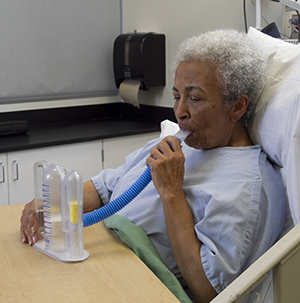
Fluid can collect in the lungs after any surgery. To clear your lungs and prevent pneumonia, breathe deeply and cough. You should do this often—at least a few times each hour. A respiratory therapist or nurse may show you how to use an incentive spirometer. This machine can help you breathe in and out the right way.
Online Medical Reviewer: Anne Fetterman RN BSN
Online Medical Reviewer: Luc Jasmin MD
Online Medical Reviewer: Raymond Kent Turley BSN MSN RN
Date Last Reviewed: 03/01/2024
© 2000-2025 The StayWell Company, LLC. All rights reserved. This information is not intended as a substitute for professional medical care. Always follow your healthcare professional's instructions.
Find the right provider to meet your needs
From primary care to specialty services and more.
Find a Doctor
Call for an Appointment
Offering personalized care at more than 20 clinics across three cities and two states.
Call NowRelated Articles
Protecting Your Foot After Foot Surgery
To help the bone heal properly, you may need to wear a cast. If you do, always keep it dry. Your healthcare provider will tell you whether you can bear weight on your foot while it heals. They may also prescribe a surgical shoe for you to wear.
Discharge Instructions for Laminectomy
Instructions for caring for yourself after laminectomy.
Using Crutches with Swing To (Non-Weight Bearing)
These images show the use of crutches with swing to.
Advanced Exercises After Knee Replacement Surgery
Exercises after knee replacement surgery are an important part of your recovery.