A cast helps your body heal. A damaged cast can prevent your injury from healing quickly and correctly. If your cast becomes damaged, it may need to be replaced. Take good care of your cast to help it last.
Keep your cast dry
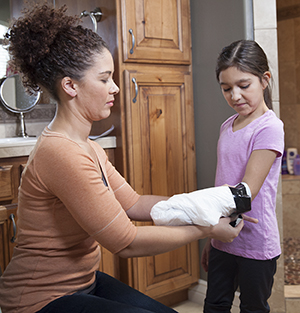
If a plaster cast gets wet, it can soften and fall apart. If the padding of a synthetic cast gets wet, it can irritate and damage your skin. Plaster and synthetic casts must stay dry. Don't do activities that can get your cast wet. Take special care to keep your cast dry when you bathe or shower. Also take care if it’s raining or snowing outside. To keep your cast dry:
-
Take a sponge bath to prevent getting your cast wet, unless your healthcare provider tells you otherwise.
-
Ask your provider when you can take a shower or bathe.
-
Ask your provider about the best way to keep your cast dry when bathing or showering.
-
If your cast does get wet, try drying it as soon as possible. To do this, use a hair dryer set to cool.
What NOT to do
If your cast is damaged, it can’t do its job. To protect your cast and your skin underneath:
-
Don’t stick things in your cast, even to scratch your skin. Objects put in your cast may get stuck. Also, your skin may be cut and become infected. If your skin itches, try blowing cool air into the cast with a hair dryer.
-
Don’t cut or tear your cast. Cover any rough edges of the cast with cloth tape. (You can buy this at a pharmacy.) Never try to remove your cast yourself. If irritation continues, return to your healthcare provider. The cast may need to be modified or replaced.
-
Don’t pick at the padding of your cast. Padding protects your skin and must be kept intact.
When to have someone contact the healthcare provider
Tell an adult right away if you have any of these:
-
Your injured body part tingles or feels numb.
-
You have extreme pain that can’t be managed.
-
Your cast feels too tight or too loose.
-
Your fingers or toes swell, feel very cold, or turn blue or gray.
-
Your cast is damaged, cracked, or has rough edges that hurt.
-
Your cast gets wet or soggy.
Online Medical Reviewer: L Renee Watson MSN RN
Online Medical Reviewer: Raymond Turley Jr PA-C
Online Medical Reviewer: Thomas N Joseph MD
Date Last Reviewed: 09/01/2023
© 2000-2025 The StayWell Company, LLC. All rights reserved. This information is not intended as a substitute for professional medical care. Always follow your healthcare professional's instructions.
Personalized Pediatric Care
San Juan Health Partners Pediatrics. Dedicated to caring for your children.
Find a Doctor
Call for an Appointment
Offering personalized care at more than 20 clinics across three cities and two states.
Call NowRelated Articles
Discharge Instructions for Scoliosis Surgery (Child)
This information can help you care for your child who has had surgery for scoliosis.
Discharge Instructions: Using a Walker to Sit Down and Stand Up
To use your walker, you need to learn new ways to get around. A walker can help you when you sit down and stand up.
Discharge Instructions: Using Crutches (Weight-Bearing)
Your healthcare provider has prescribed crutches for you. A healthy leg can support your body weight, but when you have an injured leg or foot, you need to keep weight off it. Once you are told that you can put some weight on your leg, use a "weight-bearing" method of walking as the leg heals.
Discharge Instructions for Osteomyelitis
You've been diagnosed with osteomyelitis, a bone infection caused by bacteria or fungi. Read on to learn how to care for yourself at home.