Swelling is common after total knee replacement. It may be worse after exercise. To help control swelling, follow the steps below.
Ice your knee
Wrap an ice pack or bag of frozen peas in a thin cloth, then place it on your knee. Don’t use ice for more than
Elevate your leg
Elevate your leg above your heart. Ask your healthcare provider about safe positions to do this.
Do ankle pumps
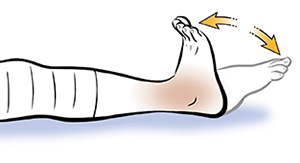
Continue doing ankle pumps. They help reduce swelling, improve circulation, and prevent blood clots. Point, then flex both feet slowly. Repeat this
Compression stocking
Your surgeon may recommend wearing a compression stocking. This will help control swelling. It may also help prevent blood clots.
Online Medical Reviewer: Rahul Banerjee MD
Online Medical Reviewer: Raymond Turley Jr PA-C
Online Medical Reviewer: Stacey Wojcik MBA BSN RN
Date Last Reviewed: 07/01/2023
© 2000-2025 The StayWell Company, LLC. All rights reserved. This information is not intended as a substitute for professional medical care. Always follow your healthcare professional's instructions.
Find the right provider to meet your needs
From primary care to specialty services and more.
Find a Doctor
Call for an Appointment
Offering personalized care at more than 20 clinics across three cities and two states.
Call NowRelated Articles
Discharge Instructions: Using Crutches (Weight-Bearing)
Your healthcare provider has prescribed crutches for you. A healthy leg can support your body weight, but when you have an injured leg or foot, you need to keep weight off it. Once you are told that you can put some weight on your leg, use a "weight-bearing" method of walking as the leg heals.
Crush Injury of the Foot, No Fracture
A crush injury to your foot causes local pain, swelling, and sometimes bruising. There are no broken bones. Learn how to care for your injury at home.
Discharge Instructions for Ankle Arthroscopy
Instructions to help take care of yourself after ankle arthroscopy.
Discharge Instructions for Foot Surgery
Arrange to have an adult drive you home after surgery. If you had general anesthesia, it may take a day or more to fully recover. So, for at least the next 24 hours: Do not drive or use machinery or power tools; do not drink alcohol; and do not make any major decisions.