You'll be moved to your room when you're awake. You can expect to feel some pain. To gain the best pain relief, answer honestly when you're asked how much you hurt. Once you've been shown how to protect your hip, you'll learn the skills needed to return to normal life. You’ll be taught how to walk, sit, and dress. To make moving easier, ask for pain medicines before each training session.
In your hospital room
You’ll be watched closely on the day of surgery. Any or all of the equipment below may be provided for your safety and comfort.
-
A foam wedge, a brace, or pillows may be used to keep your new hip in place during early healing.
-
A bar (trapeze) may be hanging over the bed. Use it to help lift your body when you change positions.
-
Special stockings and compression devices may be used to reduce the risk for blood clots. You may also be given medicine to help prevent clots.
Managing pain
At first you may feel pain, even with medicine. This is normal. But if your pain isn't reduced at all, be sure to tell the nurse.
Walking again
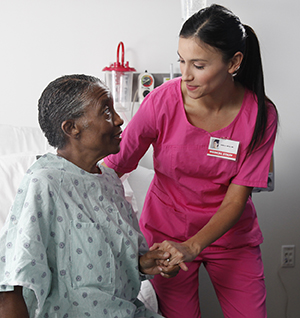
You may begin to stand and walk within hours after surgery. A physical therapist or other healthcare provider will help you. You'll be taught how much weight, if any, to put on your new joint. With practice, you’ll soon be able to move with just the aid of a walker. You can then use a cane or crutches as needed.
Online Medical Reviewer: Rahul Banerjee MD
Online Medical Reviewer: Raymond Turley Jr PA-C
Online Medical Reviewer: Stacey Wojcik MBA BSN RN
Date Last Reviewed: 09/01/2023
© 2000-2025 The StayWell Company, LLC. All rights reserved. This information is not intended as a substitute for professional medical care. Always follow your healthcare professional's instructions.
Find the right provider to meet your needs
From primary care to specialty services and more.
Find a Doctor
Call for an Appointment
Offering personalized care at more than 20 clinics across three cities and two states.
Call NowRelated Articles
Crush Injury of the Foot, No Fracture
A crush injury to your foot causes local pain, swelling, and sometimes bruising. There are no broken bones. Learn how to care for your injury at home.
Discharge Instructions: Using a Walker to Sit Down and Stand Up
To use your walker, you need to learn new ways to get around. A walker can help you when you sit down and stand up.
Discharge Instructions: Using Crutches (Weight-Bearing)
Your healthcare provider has prescribed crutches for you. A healthy leg can support your body weight, but when you have an injured leg or foot, you need to keep weight off it. Once you are told that you can put some weight on your leg, use a "weight-bearing" method of walking as the leg heals.
Home Safety After Joint Surgery
Follow these tips for home safety after joint surgery.