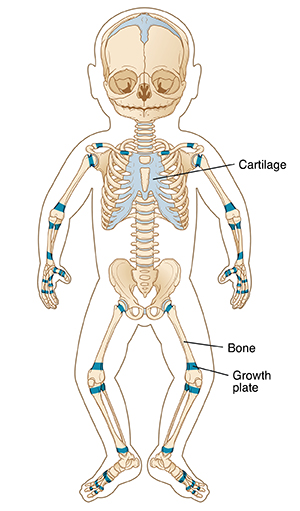
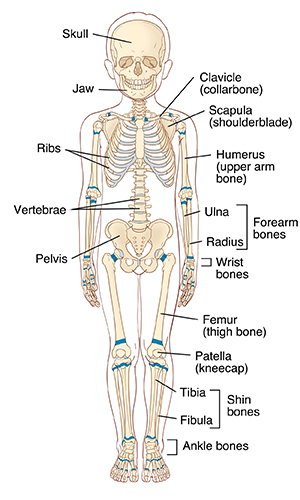
Children's bodies are still growing. So their skeletons are different from those of adults.
Online Medical Reviewer: L Renee Watson MSN RN
Online Medical Reviewer: Raymond Turley Jr PA-C
Online Medical Reviewer: Thomas N Joseph MD
Date Last Reviewed: 01/01/2022
© 2000-2025 The StayWell Company, LLC. All rights reserved. This information is not intended as a substitute for professional medical care. Always follow your healthcare professional's instructions.
Personalized Pediatric Care
San Juan Health Partners Pediatrics. Dedicated to caring for your children.
Find a Doctor
Call for an Appointment
Offering personalized care at more than 20 clinics across three cities and two states.
Call NowRelated Articles
Anatomy of a Normal Spine
Learn about the spine with these helpful detailed illustrations.
When Your Child Has Osteomyelitis
Osteomyelitis is an infection of a bone by a germ (bacteria or fungus). In children, infection in the long bones of the arms and legs are most common. Read on to learn more about this condition, including symptoms, diagnosis, and treatment.
Hernias in Children
A hernia occurs when a section of bowel pushes out through a weakness in the muscle. The hernia looks like a bulge under the skin. In baby boys, a bulge in the scrotum is the most common type of hernia and is the result of a persistent canal between the scrotum and abdomen that normally closes when a fetus is developing. A hernia can move back into the abdomen through the passage. So you may not see the bulge all the time. You may see it most when your baby is straining (such as during crying, feeding, or a bowel movement).
Understanding Epidermoid Cyst
An epidermoid cyst is a small abnormal growth in the top layers of the skin. These cysts grow slowly, and they can grow anywhere on the body. Learn about causes, symptoms, and treatment.