Infusion therapy is a safe way to take medicines or fluids that can’t be taken by mouth. With infusion therapy, medicines or fluids flow through a flexible IV (intravenous) tube called a catheter into a vein. The infusion site is usually on your arm or chest. A nurse will show you how to set up your home infusion system. Treatment will become part of your daily routine. Your supplies need to be kept sterile. That means they need to be germ free. Otherwise, they aren’t safe to use. Inspect, store, and dispose of supplies as directed by the nurse.
Inspecting your supplies
Here are tips for supply inspection:
-
Check the bag or bottle for leaks, cracks, broken seals, and contents that are cloudy or discolored.
-
Check the package for your name, and for the correct medicine or fluid name. Also check the expiration date.
-
Inspect all other supplies to be sure they’re sealed, clean, and dry, and have no cracks or tears.
-
Do not use if there are any errors or problems with the medicine, fluids, or supplies. Call your nurse.
Storing your supplies
Here are tips for supply storage:
-
Keep your supplies in a clean, dry place that’s out of the reach of children and pets.
-
Never store your medicine or supplies on the floor.
-
Store medicines or fluids as directed on the label. Some may need to be refrigerated. Take out refrigerated medicine 1 to 2 hours before treatment to bring to room temperature.
Disposing of used supplies
Here are tips for supply disposal:
-
Seal used dressings and tubing in a plastic bag. Throw the bag right in the trash—unless the nurse tells you otherwise.
-
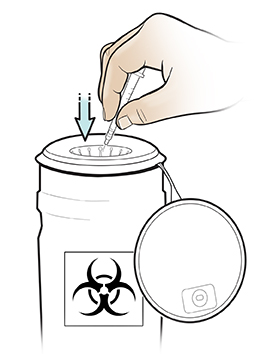
Put used needles, syringes, and other sharp items right into the sharps container without putting the caps back on. You will be instructed how to dispose of the sharps container once it is full.
Featured in
Online Medical Reviewer: Marianne Fraser MSN RN
Online Medical Reviewer: Rita Sather RN
Online Medical Reviewer: Susan K. Dempsey-Walls RN
Date Last Reviewed: 11/01/2023
© 2000-2025 The StayWell Company, LLC. All rights reserved. This information is not intended as a substitute for professional medical care. Always follow your healthcare professional's instructions.
Find the right provider to meet your needs
From primary care to specialty services and more.
Find a Doctor
Call for an Appointment
Offering personalized care at more than 20 clinics across three cities and two states.
Call NowRelated Articles
Chemotherapy Safety at Home
Chemotherapy medicines can be harmful if they touch skin. So you need to make sure caregivers and others close to you are not exposed to body fluids during a treatment and for up to 48 hours afterward.
Understanding Anemia (During Chemotherapy)
Chemotherapy can reduce the number of red blood cells in your body. When you have too few of these cells, anemia can result. Anemia has many symptoms. Talk to your healthcare provider if you have any of the symptoms listed here. You may need treatment.
Diagnosing a Mouth or Throat Tumor
You have a tumor in your mouth or throat. A tumor is a mass of abnormal cells. To learn more about your tumor, your healthcare provider will evaluate you. This may include a health history, physical exam, and some tests. Here's what to expect.
Understanding Radiation Therapy
Radiation therapy is a common cancer treatment. It uses beams of high-energy X-rays or particles to kill cancer cells or keep them from growing.