Laparoscopic tubal sterilization is surgery to block the fallopian tubes. It may be called having your tubes tied. It's done to prevent pregnancy. During surgery, a thin, lighted tube called a laparoscope is used. This allows surgery to be done through small incisions. Tubal sterilization is considered permanent birth control. Having it means you won't be able to get pregnant again. In some cases, a reversal can be tried, but it's not often successful. Never plan to have this procedure if you think you may want a reversal later.
Discuss all of your choices with your partner and your health care provider.
How effective is surgery?
This surgery is one of the most effective birth control methods. But in very rare cases, pregnancy can still occur. In some cases, the pregnancy is normal. In other cases, a fertilized egg may start to grow in a fallopian tube. This is called a tubal (ectopic) pregnancy. It needs emergency care. Talk with your health care provider if you have questions about this risk.
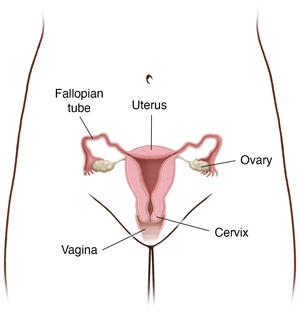
The female reproductive system
During each menstrual cycle, one of the ovaries releases an egg. This egg travels into a fallopian tube. After vaginal sex, sperm can enter the tube and fertilize the egg. The fertilized egg then implants in the wall of the uterus. If the egg isn’t fertilized, it's absorbed by the body. Or it’s discharged during your monthly period.
After tubal sterilization
After surgery, each ovary still releases an egg. But the egg’s passage through the fallopian tube is now blocked. Sperm also can’t pass through the tube to the egg. When egg and sperm can’t meet, pregnancy can’t happen. The egg is absorbed by your body. You’ll keep having menstrual periods until menopause.
Problems with tubal sterilization
Problems with tubal sterilization are rare. They can include:
-
Infection.
-
Bleeding.
-
Damage to blood vessels, nerves, or muscles.
-
Damage to the bladder, ureters, or bowel, needing surgical repair.
-
Blood clots in the legs or lungs.
-
Failure to block the fallopian tubes (very rare).
-
Formation of scar tissue.
-
Hernia formation.
Featured in
Online Medical Reviewer: Donna Freeborn PhD CNM FNP
Online Medical Reviewer: Howard Goodman MD
Date Last Reviewed: 02/01/2025
© 2000-2025 The StayWell Company, LLC. All rights reserved. This information is not intended as a substitute for professional medical care. Always follow your healthcare professional's instructions.
Compassionate Care for Women
San Juan Health Partners Obstetrics & Gynecology. With two locations serving Four Corners women.
Find a Doctor
Call for an Appointment
Offering personalized care at more than 20 clinics across three cities and two states.
Call NowRelated Articles
Hysterectomy: Surgical Procedures
A hysterectomy is the removal of a woman's uterus. It can relieve symptoms such as severe pain and bleeding. If you have cancer, it may save your life. You will discuss what type of surgery you will have with your healthcare provider.
Understanding Laparoscopic Surgery for Ovarian Torsion
This surgery fixes an ovary that has twisted. When such twisting happens, it's called ovarian torsion.
Having Robotic-Assisted Sacrocolpopexy (RASC)
Robotic-assisted sacrocolpopexy is a type of surgery. It's done to repair pelvic organ prolapse. The surgery is done with special tools and a robotic controller.
How Reproductive Laparoscopy Is Done
Laparoscopy is a type of surgery. The doctor uses a long, thin tube with a camera to look inside your body.