Going into labor before week 37 of pregnancy is called preterm labor. Preterm labor can cause your baby to be born too soon. This can lead to health problems for your baby.
Symptoms of preterm labor
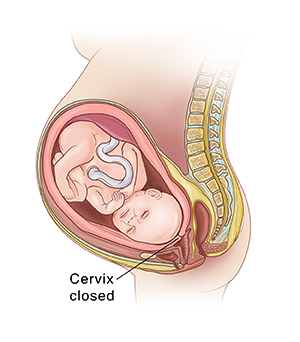
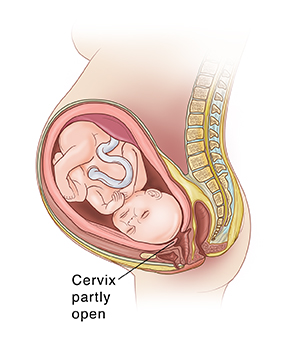
If you think you’re having preterm labor, get medical help right away. Contractions alone don’t mean you’re in preterm labor. What matters more are changes in your cervix. The cervix is the opening at the lower end of the uterus. Symptoms of preterm labor include:
-
4 or more contractions per hour
-
Strong contractions
-
Constant menstrual-like cramping
-
Low-back pain
-
Mucous or bloody fluid from the vagina
-
Bleeding or spotting in the second or third trimester
Evaluating preterm labor
Your healthcare provider will try to find out if you’re in preterm labor or just having contractions. They may watch you for a few hours. You may have the following tests or procedures:
-
Pelvic exam. This is to see if your cervix has effaced (thinned) and dilated (opened).
-
Uterine activity monitoring. This is used to detect contractions.
-
Fetal monitoring. This is done to check the health of your baby.
-
Ultrasound. This test looks at your baby’s size and position.
-
Amniocentesis. This test checks how mature your baby’s lungs are.
Caring for yourself at home
If you have preterm contractions but your cervix is still thick and closed, your healthcare provider may tell you to:
-
Drink plenty of water.
-
Do fewer activities.
-
Rest in bed on your side.
-
Don't have intercourse or stimulate your nipples.
When to call your healthcare provider
Call your healthcare provider if you have any of these:
-
4 or more contractions per hour
-
Bag of water breaks
-
Bleeding or spotting
If you need hospital care
Preterm labor often means that you need hospital care. You may need complete bed rest. You may have an IV (intravenous) line in your arm or hand. This is to give you fluids. You may be given pills or injections. These are done to help prevent contractions. You may get a medicine called a corticosteroid. This is to help your baby’s lungs mature more quickly.
Are you at risk?
Any pregnant woman can have preterm labor. It may start for no reason. But these risk factors can increase your chances:
-
Past preterm labor or early birth
-
Smoking, drug, or alcohol use in pregnancy
-
A multiple pregnancy (twins or more)
-
Problems with the shape of the uterus
-
Bleeding during the pregnancy
The dangers of preterm birth
A baby born too soon may have health problems. This is because the baby didn’t have enough time to grow. Some of the risks for your baby include:
-
Not breastfeeding or feeding well
-
Having immature lungs
-
Bleeding in the brain
-
Death
Reaching term
Your goal is to get as close to term (week 37 or later) as you can before giving birth. The closer you get to term, the higher your chance of having a healthy baby. Work with your healthcare provider. Together, you can take steps that may keep you from giving birth too early.
Online Medical Reviewer: Donna Freeborn PhD CNM FNP
Online Medical Reviewer: Heather M Trevino BSN RNC
Online Medical Reviewer: Irina Burd MD PhD
Date Last Reviewed: 09/01/2024
© 2000-2025 The StayWell Company, LLC. All rights reserved. This information is not intended as a substitute for professional medical care. Always follow your healthcare professional's instructions.
Compassionate Care for Women
San Juan Health Partners Obstetrics & Gynecology. With two locations serving Four Corners women.
Find a Doctor
Call for an Appointment
Offering personalized care at more than 20 clinics across three cities and two states.
Call NowRelated Articles
CVS (Chorionic Villus Sampling)
CVS is a test that helps you learn if a fetus has health problems. The test is most often done after 10 weeks of pregnancy.
Understanding a Multiple Pregnancy
A multiple pregnancy is usually identified early in the pregnancy so that good prenatal care can begin.
Understanding Preeclampsia
Preeclampsia is pregnancy-related hypertension that develops after 20 weeks' gestation. It can lead to health risks for you and your baby. No one knows what causes preeclampsia. But it is known that the only cure is delivery.
Understanding Placenta Previa
Placenta previa is a condition that may happen during the second or third trimester of pregnancy. It's one of the most common causes of vaginal bleeding during these trimesters.