Chronic lung disease shouldn’t stop you from traveling, visiting family and friends, and enjoying yourself. You can do this even if you use oxygen. You just need to be prepared. Changes in altitude and climate can affect breathing. This may mean making changes to your treatment. So talk with your healthcare provider about your plans.
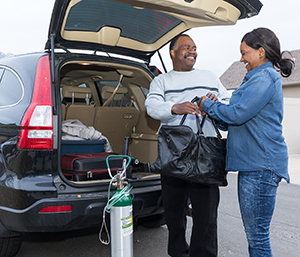
Before traveling
Get ready before taking a trip:
-
Get your prescriptions filled. Bring enough medicine for your whole trip.
-
Get copies of your prescriptions. Ask your healthcare provider if you might need prescriptions for any other medicines while traveling.
-
Bring a list of your medicines.
-
Ask your provider what to do in case of infection or a flare-up of COPD symptoms. They may prescribe emergency medicines just in case. These may include antibiotics or steroids.
-
Call your insurance company. Make sure you’ll have coverage where you’re going.
-
Get a portable nebulizer (if needed).
-
If traveling with oxygen, plan ahead:
-
Call your provider to get copies of your oxygen prescription.
-
You may need a letter from your provider stating that you must use oxygen.
-
You may need to have oxygen sent to your destination. Before you travel, call a medical supply company where you'll be staying. They can help make sure oxygen gets there before you do.
-
Call the airline, bus, boat, or train company you'll be using. Find out what's required for traveling with oxygen.
-
Give yourself a few weeks to make these arrangements.
-
While traveling
Tips to make traveling easier:
-
Wear a medical ID bracelet. This should list your health conditions. And any medicines you’re allergic to.
-
Use a hand sanitizer often. This helps kill germs and prevent infection.
-
Keep your medicines in your carry-on bags. This way, you’ll have them if you get separated from your checked luggage.
-
Use your metered dose or rescue inhaler before you get up to move around if one has been prescribed. For example, you may use it before getting off the plane. It's very important to always use the correct technique when using your inhaler.
-
Stretch your arms and legs if you’re sitting for a long time. This helps keep your blood moving. Try using your ankles and feet to spell out each letter of the alphabet.
Online Medical Reviewer: Allen J Blaivas DO
Online Medical Reviewer: Daphne Pierce-Smith RN MSN
Online Medical Reviewer: Ronald Karlin MD
Date Last Reviewed: 09/01/2024
© 2000-2025 The StayWell Company, LLC. All rights reserved. This information is not intended as a substitute for professional medical care. Always follow your healthcare professional's instructions.
Find the right provider to meet your needs
From primary care to specialty services and more.
Find a Doctor
Call for an Appointment
Offering personalized care at more than 20 clinics across three cities and two states.
Call NowRelated Articles
Chronic Lung Disease: Controlling Stress
Stress and anxiety can make breathing harder. When it's hard to breathe, it's natural to get anxious and start to panic. This makes you even more short of breath. This sequence is known as the dyspnea cycle, and it's common among people with COPD. The good news is, you have the power to break the cycle.
Pursed-Lip Breathing
Pursed-lip breathing can help you get more oxygen into your lungs when you're short of breath. Learn how and when to do it.
Exercising with a Chronic Condition: My Exercise Log
Make copies of this chart to track your progress. During the week, fill in the activities you do each day.
Using an Oxygen Tank at Home
Your healthcare provider has prescribed oxygen. This can help make breathing easier. Here are some tips for safely using oxygen at home.