There are 2 main types of lung cancer:
Non-small cell lung cancer
Most people with lung cancer have the type called non-small cell lung cancer. There are a few different types of non-small cell lung cancer. These include squamous cell carcinoma, adenocarcinoma, and large cell carcinoma. Though each of these subtypes starts in a different kind of cell in the lung, they're grouped together. They all have much the same treatment choices and outlook (prognosis).
Small cell lung cancer
Small cell lung cancer (SCLC) is much less common than non-small cell lung cancer. SCLC is sometimes called oat cell cancer. (This is because the cells are shaped like oats when viewed under a microscope.) This type of lung cancer tends to grow and spread faster than non-small cell cancer.
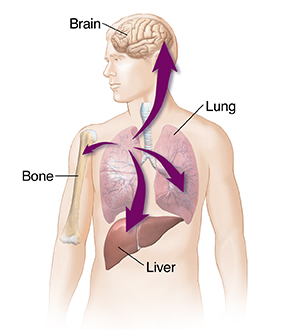
How cancer spreads
Cancer cells don’t always stay in one place. Cancer cells can break off from the place they first started. They can get into the bloodstream or lymph system and spread to other parts of the body. The lymph system is a network of nodes and vessels that help your body fight disease. It goes all over your body, much like your blood vessels.
When cancer spreads, the process is called metastasis. Lung cancer that spreads (metastasizes) often goes to the other lung or the liver, brain, or bones. The cancer cells in these other parts of the body look like, act like, and are treated like the cancer in the lung. These are not new cancers. For instance, when lung cancer spreads to the brain, it's called metastatic lung cancer to the brain or lung cancer with brain metastasis. It's not brain cancer.
How daily issues affect your health
Many things in your daily life impact your health. This can include transportation, money problems, housing, access to food, and child care. If you can’t get to medical appointments, you may not receive the care you need. When money is tight, it may be difficult to pay for medicines. And living far from a grocery store can make it hard to buy healthy food.
If you have concerns in any of these or other areas, talk with your healthcare team. They may know of local resources to assist you. Or they may have a staff person who can help.
Featured in
Online Medical Reviewer: Kimberly Stump-Sutliff RN MSN AOCNS
Online Medical Reviewer: L Renee Watson MSN RN
Online Medical Reviewer: Todd Gersten MD
Date Last Reviewed: 03/01/2023
© 2000-2025 The StayWell Company, LLC. All rights reserved. This information is not intended as a substitute for professional medical care. Always follow your healthcare professional's instructions.
Find the right provider to meet your needs
From primary care to specialty services and more.
Find a Doctor
Call for an Appointment
Offering personalized care at more than 20 clinics across three cities and two states.
Call NowRelated Articles
Lung Cancer: Understanding the Basics
A helpful overview of lung cancer, including types of lung cancer, causes, how it spreads, and symptoms.
Lung Cancer: Understanding the Risk Factors
A risk factor is anything that increases your chance of getting a disease. When it comes to cancer, risk factors can be what you eat, where you work, and who your parents are.
Lung Cancer: Understanding Early Detection
If lung cancer is detected early, when it’s small and hasn’t had the chance to spread, it is more likely to be treated successfully. But lung cancer can be hard to catch at an early stage. People with lung cancer often don’t show symptoms until it’s more advanced. Even then, it’s easy to attribute those symptoms to other causes.
Being Diagnosed with Lung Cancer as a Nonsmoker
Between 1 in 10 and 1 in 5 lung cancers each year are diagnosed in non-smokers.