Pneumonia is a serious lung infection. It can affect 1 or both lungs. Many cases of pneumonia are caused by bacteria or viruses. Fungi may also cause pneumonia. But this is less common.
You may get pneumonia after an illness, such as a cold, flu, or bronchitis. Those most at risk for pneumonia include:
-
Babies
-
Children
-
Older adults
-
Smokers
-
People with long-term (chronic) health problems or weak immune systems
Healthy lungs
-
Air travels in and out of the lungs through tubes called airways.
-
The tubes branch into smaller passages called bronchioles. These end in tiny air sacs called alveoli.
-
Blood vessels surrounding the alveoli take oxygen into the bloodstream. At the same time, the alveoli remove carbon dioxide (a waste gas) from the blood. The carbon dioxide is then exhaled.
When you have pneumonia
-
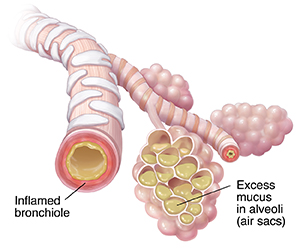
Pneumonia causes the bronchioles and the alveoli to fill with excess mucus or pus. They become inflamed.
-
Your body’s response may be to cough. This can help clear out the fluid.
-
The fluid (mucus) you cough up may look green or dark yellow.
-
The excess mucus may make you feel short of breath.
-
The inflammation and infection may give you a fever.
What are the symptoms?
Pneumonia symptoms can come without warning. At first, you may think you have a cold or flu. But symptoms may get worse quickly. They then turn into pneumonia. Symptoms can be different for bacterial and viral pneumonia. They may be mild or severe. Common symptoms may include:
-
Severe cough with green or yellow mucus that doesn't get better. Or gets worse.
-
Fever and chills
-
Upset stomach (nausea), vomiting, or diarrhea
-
Loss of appetite
-
Shortness of breath with normal daily activities
-
Increased heart rate
-
Chest pain or discomfort when breathing in or coughing
-
Headache
-
A lot of sweating and clammy skin
-
Severe tiredness (fatigue)
Online Medical Reviewer: Andrew D Schriber MD
Online Medical Reviewer: Jessica Gotwals RN BSN MPH
Online Medical Reviewer: Rita Sather RN
Date Last Reviewed: 04/01/2024
© 2000-2025 The StayWell Company, LLC. All rights reserved. This information is not intended as a substitute for professional medical care. Always follow your healthcare professional's instructions.
Find the right provider to meet your needs
From primary care to specialty services and more.
Find a Doctor
Call for an Appointment
Offering personalized care at more than 20 clinics across three cities and two states.
Call NowRelated Articles
How to Prevent the Spread of Tuberculosis
Tuberculosis (TB) is a disease caused by a bacteria. It's spread from person to person through the air. Read about how to help prevent TB from spreading.
Understanding Chickenpox
Chickenpox is a viral illness that spreads very easily from person to person. The virus that causes chickenpox can stay in the body after the illness and later cause shingles. Learn about its symptoms and how it's treated.
Chest and Lung Problems
Learn about the common types of chest and lung problems, such as masses, infections, airway diseases, and other diseases.
Understanding Cold Sores
Cold sores are small blisters or sores on the lip or sometimes inside the mouth. Learn what causes them, their symptoms, and how to prevent them.