Septal myectomy is a type of open-heart surgery. It’s done to treat hypertrophic cardiomyopathy (HCM). This is when part of the heart muscle becomes thick. The septum of the heart can thicken because of a family history of the disease or from uncontrolled high blood pressure. And thyroid conditions may cause HCM. An infant can be at risk for HCM when the pregnant mother has diabetes. The surgery helps ease symptoms of the condition.
What is hypertrophic cardiomyopathy?
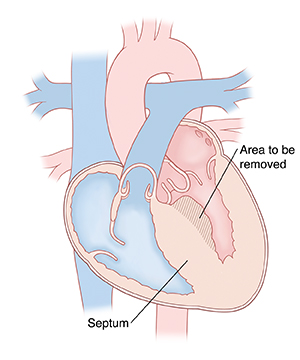
The heart has four chambers. The two lower chambers are called ventricles. The left and right ventricles are separated by a wall of muscle called the septum. With hypertrophic cardiomyopathy, the walls of the septum and the ventricles may get thick. The septum may bulge into the left ventricle. This can partly block the blood flow out to the body. This causes the heart to work harder. It also causes symptoms such as tiredness, chest pains, dizziness, and feeling short of breath with regular activity. In extreme cases, the decreased blood flow from the heart chamber to the body can cause you to faint or to develop dangerous and life-threatening heart rhythms.
Why septal myectomy is done
In many cases, medicine can relieve the symptoms. But if medicine doesn’t work well to relieve symptoms, a septal myectomy often works. A woman with hypertrophic cardiomyopathy may need the surgery before becoming pregnant. This may be the case even if her symptoms aren’t severe.
How septal myectomy is done
During septal myectomy, a surgeon removes extra muscle from the thickened septum. This lets the blood empty from the ventricle more easily.
Risks of septal myectomy
All procedures have risks. The risks of septal myectomy include:
-
Irregular heart rhythms, such as heart block (see below).
-
Infection.
-
Bleeding.
-
Blood clots that can lead to stroke or heart attack.
-
Problems from anesthesia.
-
Aortic valve problems because of movement of the valve in surgery.
-
Removal of too much heart muscle.
-
Blood flow problems during surgery that can lead to poor pumping of the heart in the future.
Your own risks may vary based on your age and your overall health. Ask your health care provider which risks apply most to you. You may have a higher risk of problems if you have any of the following:
-
Chronic illness
-
Other heart conditions
-
Lung problems
-
Advanced age
-
Obesity
-
History of smoking
-
Infections
-
Diabetes
Heart block after septal myectomy
Heart block is a common problem after this surgery. Heart block is a disruption to the electrical signals through the heart. This can cause your heart to skip beats. Or it may beat too slowly. Some kinds of heart block need treatment with a pacemaker.
Online Medical Reviewer: Stacey Wojcik MBA BSN RN
Online Medical Reviewer: Steven Kang MD
Date Last Reviewed: 02/01/2025
© 2000-2025 The StayWell Company, LLC. All rights reserved. This information is not intended as a substitute for professional medical care. Always follow your healthcare professional's instructions.
Find the right provider to meet your needs
From primary care to specialty services and more.
Find a Doctor
Call for an Appointment
Offering personalized care at more than 20 clinics across three cities and two states.
Call NowRelated Articles
Understanding Advanced Heart Failure and Left Ventricular Assist Devices
When you have heart failure, your heart can no longer pump the amount of blood your body needs to work correctly. A left ventricular assist device (LVAD) can help your heart pump blood.
The Cardiologist
A cardiologist is a healthcare provider who has had extra training to treat problems of the heart and blood vessels. These include heart attack and heart failure.
Congenital Pulmonary Stenosis Balloon Valvuloplasty
Congenital pulmonary stenosis is a health problem present from birth. It's when the pulmonary valve in your heart doesn't fully open. Congenital pulmonary stenosis balloon valvuloplasty is a type of procedure that aims to fix this problem. It does so without the need for open heart surgery.
Transradial Cardiac Catheterization
Transradial cardiac catheterization is a procedure used to treat and diagnose certain heart conditions. It is also known as transradial cardiac cath.