The first few hours
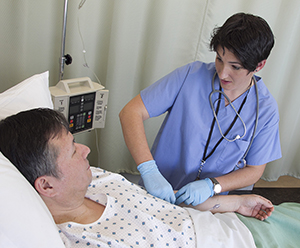
You’ll be closely monitored in the post anesthesia care unit (PACU) or the intensive care unit (ICU) for the first few hours after surgery. Here, you will wake up from the anesthesia. Try not to move your head or neck, the area where the incisions were made. It’s normal to feel some pain near the incision. You'll get pain medicine as needed. You’ll also have an IV (intravenous) to give you fluids and medicine. Your blood pressure, breathing, and other vital signs will be closely watched. Your loved ones may be able to visit you soon. The medical staff will watch your mental state closely to make sure there are no changes.
As you regain strength
If your blood pressure, breathing, and heart rate are normal, you will be moved to a regular room. If your doctor has concerns about your blood pressure and heart rate being too low or too high, you may need to spend some more time in the ICU. Expect to be up and walking within 24 hours if you have no problems. If a drain was inserted into the wound area, the doctor or a nurse will remove it the day after surgery. Most people spend at least 1 night in the hospital. You can go home when your doctor says it’s OK. Have a trusted adult drive you home.
Online Medical Reviewer: Deepak Sudheendra MD
Online Medical Reviewer: Marianne Fraser MSN RN
Online Medical Reviewer: Rita Sather RN
Date Last Reviewed: 04/01/2024
© 2000-2025 The StayWell Company, LLC. Todos los derechos reservados. Esta información no pretende sustituir la atención médica profesional. Sólo su médico puede diagnosticar y tratar un problema de salud.
Find the right provider to meet your needs
From primary care to specialty services and more.
Find a Doctor
Call for an Appointment
Offering personalized care at more than 20 clinics across three cities and two states.
Call NowRelated Articles
Discharge instructions for high blood pressure (hypertension)
High blood pressure can damage your heart, blood vessels, eyes, kidneys, and other organs. You and your healthcare provider can manage your blood pressure with lifestyle changes and medicine.
Heart Attack: Having Sex Again
Tips to returning to sexual activity after heart attack.
Discharge Instructions for Catheter Ablation
This catheter ablation procedure destroyed (ablated) a few of the cells in your heart that were causing your heart rhythm problem. During the procedure, a thin, flexible wire (called a catheter) was inserted into a blood vessel in your upper thigh and threaded up to the heart.
Discharge Instructions for Heart Failure
The heart is a muscle that pumps oxygen-rich blood to all parts of the body. When you have heart failure, the heart is not able to pump as well as it should. Symptoms of heart failure can be controlled by changes in your lifestyle and by following your doctor's advice. Symptoms of heart failure can be controlled by lifestyle changes and by following your doctor's advice.