You may be surprised to learn that heart disease is the biggest threat to your health—even more so than breast cancer. And the same things that put you at risk of a heart attack, also called acute myocardial infarction, or AMI, also increase your chances of stroke and other health problems. The main risk factors include high blood pressure, smoking, poor diet, diabetes, family history, obesity, and a sedentary lifestyle. If your heart is in trouble, your body may send you warning signs. It's important to be aware of the signs and talk to your doctor about them. Don't delay. Your health—and your life—could depend on it.
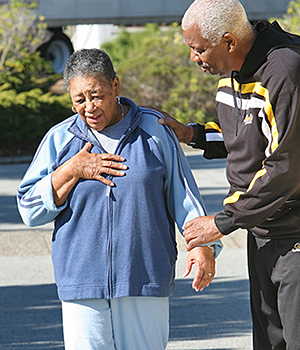
Learn the signs
When your heart isn’t getting enough oxygen, you may experience a feeling called angina. It can be a sign that you are at risk for having a heart attack. Angina is often referred to as "chest pain," but this can be misleading. It’s not always painful, and it’s not always in the chest. Many women have other symptoms along with—or instead of—chest pain or discomfort. Talk to your doctor if you notice any of the following:
-
Discomfort, aching, tightness, or pressure that comes and goes, in the back, abdomen (belly), arm, shoulder, neck, jaw, or chest
-
Feeling much more tired than usual, for no clear reason
-
Becoming breathless while doing something that used to be easy
-
Heartburn, nausea, or a burning feeling that seems unrelated to food
-
Lightheadedness or faintness
Get to the heart of the problem
Women often don’t realize their symptoms could be related to a heart condition Even some doctors don’t make the connection at first. If you feel any of the symptoms listed here, see your doctor and ask to be tested for heart disease. Do so even if you’re not sure that’s the cause. Tests, such as an electrocardiogram stress echocardiogram, nuclear imaging, and cardiac catheterization, will reveal more about the condition of your heart. If your symptoms are heart-related, your doctor will start treatment.
Hormone therapy is not the answer
Doctors used to think that older women could reduce their heart disease risk by taking hormones in pill form (hormone therapy or HT). It turns out that’s not true. In fact, HT could actually increase your risk of having a heart attack or stroke. Talk to your doctor about the risks and benefits of HT. It may be prescribed for other health problems. But it should not be taken to prevent or treat heart disease.
Is it angina or a heart attack?
Angina that occurs on exertion and goes away after a few minutes of rest or with medicine is called stable angina. Unstable angina is unpredictable or unexpected angina symptoms that don't resolve. Or they may go away and come back. This is a medical emergency. It could be a sign of an active heart attack. Call 911 right away!
Online Medical Reviewer: Glenn Gandelman MD MPH
Online Medical Reviewer: Lu Cunningham RN BSN
Online Medical Reviewer: Quinn Goeringer PA-C
Date Last Reviewed: 05/01/2025
© 2000-2025 The StayWell Company, LLC. All rights reserved. This information is not intended as a substitute for professional medical care. Always follow your healthcare professional's instructions.
Find the right provider to meet your needs
From primary care to specialty services and more.
Find a Doctor
Call for an Appointment
Offering personalized care at more than 20 clinics across three cities and two states.
Call NowRelated Articles
Event Monitor
An event monitor is a portable device used to record your heart's electrical activity when you have symptoms. It records the same information as an electrocardiogram (ECG), but for longer durations of time. Most of these devices can send the recorded information directly to your healthcare provider. This allows him or her to analyze the electrical activity of your heart while you are having symptoms.
Pacemaker Failure
Pacemakers are reliable life-saving devices, but problems do rarely occur. It is important to understand why you have a pacemaker. This can also help you understand why it might fail." "
Taking a Beta-Blocker
Beta-blockers decrease your heart's workload and help it beat more regularly. This can reduce chest pain. It may also lower your blood pressure.
Getting Started with Cardiac Rehab: Exercise
Being more active is a key part of heart attack prevention. It helps your heart muscle and the rest of your body get stronger. It also helps control other heart risks.