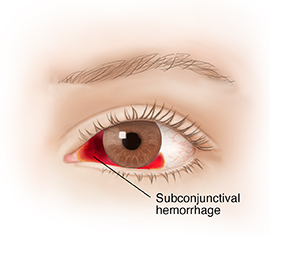
A subconjunctival hemorrhage occurs when a blood vessel breaks open on the white of the eye. It causes a bright red patch on the white of the eye. It's similar to a bruise on the skin. This type of hemorrhage is common. It can look quite alarming, but it's usually harmless.
Understanding the conjunctiva
The conjunctiva is the thin, skin-like layer that covers the inside of the eyelids and the surface of the eye. It has many tiny blood vessels that bring oxygen and nutrients to the eye. The sclera is the white part of the eye that lies beneath the conjunctiva. Sometimes a blood vessel in the conjunctiva breaks open and bleeds. The blood then collects under the conjunctiva and turns part of the eye red. Over several weeks, your body then absorbs the blood.
What causes subconjunctival hemorrhage?
In many cases, the cause isn’t known. But some health conditions may make it more likely. These include:
-
Eye injury
-
Eye surgery
-
High blood pressure
-
Inflammation of the conjunctiva
-
Contact lens use
-
Diabetes
-
Arteriosclerosis
-
Tumor of the conjunctiva
-
Diseases that affect blood clotting
-
Violent sneezing, coughing, or vomiting
-
Certain medicines that can increase bleeding, such as aspirin or blood thinners
-
Pushing hard during childbirth
-
Straining during constipation
Symptoms of subconjunctival hemorrhage
The main symptom is a red patch on the eye. You may notice it after waking up in the morning. In most cases, just one eye will have a hemorrhage. It usually happens once and then goes away. But some health conditions may cause repeat hemorrhages. You may feel like you have something in your eye, but this is not common. The hemorrhage shouldn’t affect your eyesight or cause any pain. If you do have pain, you may have another type of problem with your eye.
Diagnosing subconjunctival hemorrhage
Your healthcare provider will ask about your health history. You may have a physical exam. This includes a basic eye exam. Your healthcare provider will make sure you don’t have other causes of red eye that may need other treatment.
You will need to see an eye surgeon (ophthalmologist) if you have had an eye injury. This eye care provider might use a special lighted microscope to look closely at your eye. This helps show them if the injury hurt the eye itself or just its outer layer.
If this is not your first subconjunctival hemorrhage, your healthcare provider may need to find the cause. For example, you may need blood tests to check for a blood clotting disorder.
Treatment for subconjunctival hemorrhage
In most cases, you will not need treatment. The red patch will usually go away on its own in a few days to a few weeks. It will turn from red to brown and then yellow. There are no treatments to speed up this process. Your healthcare provider may suggest using artificial tears eye drops to help relieve any eye irritation.
If your subconjunctival hemorrhage was caused by a health condition, that condition will be treated. For example, you may need a blood pressure medicine to treat high blood pressure.
When to call your healthcare provider
Call your healthcare provider right away if you have any of these:
-
Hemorrhage that doesn’t go away in 2 to 3 weeks
-
Eye pain
-
Changes in vision, such as flashes, new lines or specks (floaters), and shadows in your side (peripheral) vision
-
Loss of eyesight
-
Another subconjunctival hemorrhage
Online Medical Reviewer: Chris Haupert MD
Online Medical Reviewer: Tara Novick BSN MSN
Online Medical Reviewer: Whitney Seltman MD
Date Last Reviewed: 12/01/2022
© 2000-2025 The StayWell Company, LLC. All rights reserved. This information is not intended as a substitute for professional medical care. Always follow your healthcare professional's instructions.
Find the right provider to meet your needs
From primary care to specialty services and more.
Find a Doctor
Call for an Appointment
Offering personalized care at more than 20 clinics across three cities and two states.
Call NowRelated Articles
Blood in Eye (Vitreous Hemorrhage)
The vitreous is the clear, thick gel inside your eyeball. A hemorrhage means there is some blood in it.
Conjunctivitis Caused by Irritation
Conjunctivitis may be caused by allergies or other irritants. The problem can keep coming back. Sometimes an eye infection will result. Treatment involves relieving the symptoms and avoiding the cause of the irritation.
Understanding Focusing Problems
Your vision depends on how light is focused in your eye. A look at 3 common problems with focusing that make vision blurry: farsightedness, nearsightedness, and astigmatism.
Convergence Insufficiency
Convergence insufficiency (CI) is when the eyes have trouble working together while focusing on an object at that is close by.