A black eye is really a bruise around your eye. It is often caused by an injury to your face or head. It is not normally from an injury to the eye itself. The swelling and black-and-blue color happen because of blood and fluids collecting in the skin around your eye. A black eye should return to normal in 1 or 2 weeks.
When to go to the emergency room (ER)
In many cases, a black eye is a minor injury. It can be treated at home with cold packs and pain medicine. But get medical care right away if you have any of these symptoms:
-
A change or loss of vision
-
Trouble moving your eye up and down or side to side
-
Blood inside your eye, or bleeding from your nose or ears
-
Fluid leaking from your eye
What to expect in the ER
While in the ER, you may expect the following:
-
Your injury will be examined.
-
Your vision, the way your eye moves, and the bones around your eye will be checked.
-
You may have a fluorescein stain test. This uses dye and a special light to check for damage to the surface of your eye.
-
An X-ray or other tests may be done.
-
Depending on the results of your exam and tests, you may be referred to an eye specialist (ophthalmologist).
Follow-up
While your eye is healing, contact your health care provider if you notice any of these symptoms:
-
Swelling that doesn't improve after a few days
-
Increased or severe pain
-
Changes in your vision
-
Warmth, redness, or pus near the bruise
-
Sensitivity to light
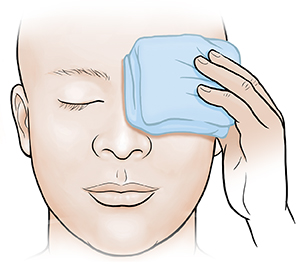
To reduce pain and swelling from a black eye
-
Apply ice packs every 20 minutes while you're awake for the first 24 hours. You can make your own ice pack by putting ice cubes in a bag that seals and wrapping the bag in a thin towel. Don’t put the ice directly on your skin. Ice can damage the skin.
-
Use warm compresses every 20 minutes while you're awake for the next 24 hours.
Online Medical Reviewer: Chris Haupert MD
Online Medical Reviewer: Jessica Gotwals RN BSN MPH
Online Medical Reviewer: Whitney Seltman MD
Date Last Reviewed: 03/01/2025
© 2000-2025 The StayWell Company, LLC. All rights reserved. This information is not intended as a substitute for professional medical care. Always follow your healthcare professional's instructions.
Find the right provider to meet your needs
From primary care to specialty services and more.
Find a Doctor
Call for an Appointment
Offering personalized care at more than 20 clinics across three cities and two states.
Call NowRelated Articles
What Is Conjunctivitis?
Conjunctivitis is an irritation or infection. It affects the membrane that covers the white of your eye and the inside of your eyelid (conjunctiva). It can happen to one or both eyes.
Uveitis
Uveitis is inflammation inside the eye. This can be caused by injury to the eye or disease somewhere else in the body. Symptoms include eye pain, redness, blurred vision, sensitivity to light, and floating spots in the vision.
Meibomian Gland Blockage
The meibomian glands are small glands located inside the upper and lower eyelids. They secrete oils that work with tears. If your meibomian glands become blocked by thickened oils, your eyes will become dry. Your eyes may feel irritated.
Ptosis
Ptosis is when the upper eyelid droops down more than it should. If the ptosis is severe, it may block vision.