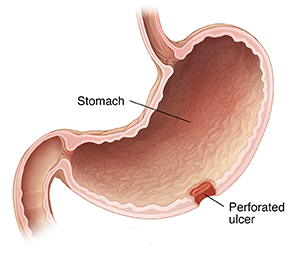
A peptic ulcer is an open sore in the stomach lining or the upper part of the small intestine (duodenum). An ulcer can go through all the layers of the digestive tract and form a hole (perforation). This is called a perforated ulcer. A perforated ulcer lets food and digestive juices leak out of the digestive tract. This is a serious health problem that needs urgent medical attention.
What causes perforated ulcers?
A hole will form if peptic ulcers go untreated. To find the cause of your ulcer, your healthcare provider will give you an exam and review your health history. They may also order tests. The main causes of peptic ulcers include:
-
Infection with the H. pylori (Helicobacter pylori) bacteria. This damages the stomach lining. Digestive juices can then harm the digestive tract.
-
Long-term use of some over-the-counter pain medicines such as NSAIDs (non-steroidal anti-inflammatory drugs). These include ibuprofen, naproxen, and aspirin. This makes stomach or intestinal damage more likely.
Symptoms of a perforated ulcer
Symptoms of a perforated ulcer may include:
-
Sudden, severe pain in the belly (abdomen), usually in the upper abdomen
-
Pain spreading to the back or shoulder
-
Upset stomach (nausea) or vomiting
-
Lack of appetite or feeling full
-
Swollen belly or feeling bloated
Treatment for a perforated ulcer
Treatment for a perforated ulcer starts with fixing the hole in your digestive tract. This may be done with surgery.
Other treatments are aimed at easing pain and removing the cause of the ulcer. Prescription medicines may help with the following:
-
Reducing the amount of acid the stomach makes
-
Coating the lining of the stomach and the duodenum
-
Treating infections
Your provider may also give you different medicines if your ulcer was caused by over-the-counter pain medicines. In some cases, you may not have another choice. But, check with your healthcare provider to see what's best for you.
Possible complications of a perforated ulcer
Perforated ulcers can have serious complications. These include:
-
Infection of the lining of the abdomen
-
Bloodstream infection
-
Death
When to call your healthcare provider
Call your healthcare provider right away if you have any of these:
-
Vomiting blood, or vomit that looks like coffee grounds
-
Bloody, black, or tarry-looking stools
-
Fever of 100.4°F (38°C) or higher, or as directed by your provider
-
Chills
-
Pain that gets worse
-
Symptoms that don’t get better with treatment, or symptoms that get worse
-
New symptoms
Author: Freed, Becca
Online Medical Reviewer: Jen Lehrer MD
Online Medical Reviewer: L Renee Watson MSN RN
Online Medical Reviewer: Rita Sather RN
Date Last Reviewed: 05/01/2022
© 2000-2025 The StayWell Company, LLC. All rights reserved. This information is not intended as a substitute for professional medical care. Always follow your healthcare professional's instructions.
Find the right provider to meet your needs
From primary care to specialty services and more.
Find a Doctor
Call for an Appointment
Offering personalized care at more than 20 clinics across three cities and two states.
Call NowRelated Articles
Diverticulitis
Some people get pouches along the wall of the colon as they get older. These pouches are called diverticula. They often cause no symptoms. If the pouches become blocked, you can get an infection. This infection is called diverticulitis.
Possible Gallstone with Biliary Colic (Presumed)
Biliary colic is spasm of the gallbladder. This can be caused by gallstones blocking the passage of bile out of the gallbladder. Here's how to care for the condition at home.
Hiatal Hernia
When you have a hiatal hernia, the top part of the stomach can push up through the diaphragm. This lets stomach acid flow back up the esophagus. Read on to learn about symptoms, treatment, home care, and follow-up care.
Bacterial Gastroenteritis (Adult)
Gastroenteritis is an infection in the intestinal tract. It is often caused by bacteria. This infection may cause fever, vomiting, stomach cramping, and diarrhea. Here's how to care for yourself at home.