Neurogenic bowel is the loss of normal bowel function. It’s caused by a nerve problem in the lower part of the colon. This is where solid waste is stored before it leaves the body. A spinal cord injury or a nerve disease may damage the nerves that help control this part of the colon. This causes problems with the colon’s ability to store and move waste. It often causes constipation and bowel accidents. These problems can cause physical, social, and emotional problems. But this condition may be managed with methods to help reduce problems.
How the gastrointestinal tract works
The food you eat goes through your gastrointestinal (GI) tract for digestion. The GI tract is a long tube. Muscles around the GI tract move the food along. They do this by squeezing the tube in wavelike motions (peristalsis).
Food travels from the mouth down the food pipe (esophagus) to the stomach. It then goes into the intestines. The first part is the small intestine. This part of the tube absorbs nutrients from the food. Waste products (stool) then move into the large intestine. This part of the tube is also known as the colon or large bowel. The colon absorbs excess water from the stool. The stool is stored in the rectum. This area is the last part of the GI tract. Then the stool is moved through the anus during a bowel movement (BM). A ring of sphincter muscles keeps the stool inside the rectum until you have a BM.
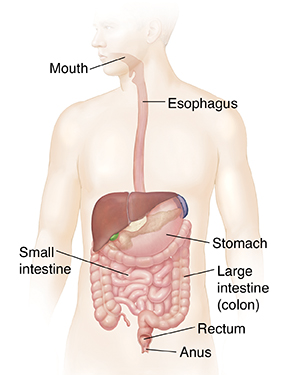
The muscles and nerves around your rectum and anus need to work together for your bowels to work normally. Nerves control the muscles of the rectum. They signal when the rectum is full. Damage to these nerves can cause problems with bowel control. The damage may reduce motion in the muscles around the colon. The damage may block signals to or from the rectum and anus. You may not feel when you need to have a BM. Or you may not be able to have a BM when you want.
Types of neurogenic bowel
There are two main kinds of neurogenic bowel:
-
Reflex (spastic) bowel. This is when you can’t relax the anal sphincter on your own. It may be caused by an injury to or disease of, the brain or upper part of the spinal cord. You may have constipation. Signals between the colon and the brain are disrupted. Or you may not feel a bowel movement coming. An unplanned BM can happen when the rectum is full.
-
Flaccid bowel. This is reduced movement in the colon. It may be caused by a lower spinal cord injury or disease. The anal sphincter is looser than normal. This can lead to constipation with leaking of stool.
What causes neurogenic bowel?
Nerve damage may lead to neurogenic bowel. This can happen from:
-
Injury, such as spinal cord injury
-
Neurologic disease, such as multiple sclerosis (MS) or amyotrophic lateral sclerosis (ALS)
-
Stroke
Symptoms of neurogenic bowel
Neurogenic bowel may cause symptoms such as:
-
No feeling of the bowel being full
-
Trouble having a bowel movement
-
Constipation or diarrhea
-
Leaking of stool
-
Sudden bowel movements without warning
-
Upset stomach or belly pain
Diagnosing neurogenic bowel
Your healthcare provider will ask about your health history and symptoms. You'll have a physical exam. This may include an exam of the rectum. You may need to fill out a stool diary. This is a way to record when you have bowel movements. You may need tests such as:
-
Anorectal manometry to measure sphincter strength
-
Ultrasound scans of the anus
-
MRI or computed tomography (CT) scans of your brain or spinal cord
-
Electromyography to test the electrical activity of the muscles around the anus and rectum
Treating neurogenic bowel
Talk with your provider about treating your neurogenic bowel. A fiber supplement is often helpful. In general, planned bathroom sessions and rectal suppositories may help give some consistent timing for moving your bowels. Laxatives may be used for constipation. Your provider may advise a particular type. Talk about what is the best choice for you. Research is being done on ways to repair and heal spinal cord problems.
Online Medical Reviewer: Jen Lehrer MD
Online Medical Reviewer: Raymond Kent Turley BSN MSN RN
Online Medical Reviewer: Ronald Karlin MD
Date Last Reviewed: 05/01/2022
© 2000-2025 The StayWell Company, LLC. All rights reserved. This information is not intended as a substitute for professional medical care. Always follow your healthcare professional's instructions.
Find the right provider to meet your needs
From primary care to specialty services and more.
Find a Doctor
Call for an Appointment
Offering personalized care at more than 20 clinics across three cities and two states.
Call NowRelated Articles
Diverticulosis
Diverticulosis means that small pouches have formed in the wall of the large intestine. Most often, this problem causes no symptoms and is common as people age.
What Is a Hernia?
A hernia is when an organ or tissue pushes through a weak area in the belly (abdominal) wall. Read on to learn about types of hernias and how they are diagnosed and treated.
What Are Gallstones?
Gallstones form when certain substances in the bile crystallize and become solid. Read on for details about symptoms, diagnosis, and treatment.
Understanding a Bruised Liver
A bruise occurs when small blood vessels break open and leak blood into nearby tissues. Learn about treatment for a bruised liver.