Vomiting and diarrhea can make you feel awful. Your stomach and bowels are reacting to an irritant. This might be food, medicine, bacteria, or a virus. Vomiting and diarrhea are 2 ways your body tries to remove the problem from your system. Nausea is a symptom that prevents you from eating. This can give your stomach and bowels time to recover. Self-care can help ease your discomfort.
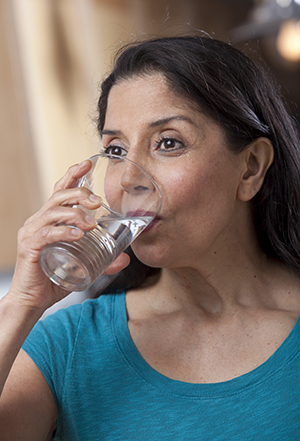
Drink liquids
Drink or sip liquids. This is so you don't lose too much fluid (dehydration). To do this:
-
Choose clear liquids, such as water or broth.
-
Don't have drinks with a lot of sugar in them. This includes juice and soda. These can make diarrhea worse.
-
Don't have drinks with caffeine and alcohol.
-
If you have severe vomiting or diarrhea, don't drink sports drinks or electrolyte drinks. These don't have the right mix of water, sugar, and minerals. They can make the symptoms worse. Try an oral rehydration solution.
-
Suck on ice chips if nausea makes it hard for you to drink.
When you’re able to eat again
Try these tips:
-
As nausea eases and your appetite comes back, slowly go back to your normal diet.
-
Ask your provider if you should not eat certain foods.
Medicines
When considering medicines:
-
Don't use medicines to stop diarrhea or vomiting unless your provider tells you to do so. Vomiting and diarrhea can help your body get rid of harmful substances.
-
Some medicines can cause vomiting and diarrhea. Talk with your provider about all medicines you take. Ask which ones may cause these symptoms.
-
Aspirin and other nonsteroidal anti-inflammatory drugs (NSAIDs) can bother your stomach. Don't use them when you have an upset stomach.
-
Some over-the-counter medicines can help control nausea. Others can help soothe an upset stomach. Ask your provider which medicines may help you.
When to call your healthcare provider
Call your provider right away if you have any of these:
-
Bloody or black vomit or poop
-
Severe, steady belly pain
-
Vomiting with a bad headache or stiff neck
-
Vomiting after a head injury
-
Vomiting and diarrhea together for more than 1 hour
-
Can't sip liquids after more than 12 hours
-
Vomiting that lasts more than 24 hours
-
Severe diarrhea that lasts more than 2 days
-
Fever of 100.4°F (38°C) or higher, or as advised
-
Yellow color to your skin or the whites of your eyes (jaundice)
-
Can't pee
-
Can't keep down some oral medicines, such as those for seizures or heart problems
Online Medical Reviewer: Heather M Trevino BSN RNC
Online Medical Reviewer: Marianne Fraser MSN RN
Online Medical Reviewer: Shaziya Allarakha MD
Date Last Reviewed: 04/01/2024
© 2000-2025 The StayWell Company, LLC. All rights reserved. This information is not intended as a substitute for professional medical care. Always follow your healthcare professional's instructions.
Find the right provider to meet your needs
From primary care to specialty services and more.
Find a Doctor
Call for an Appointment
Offering personalized care at more than 20 clinics across three cities and two states.
Call NowRelated Articles
Managing Ulcerative Colitis: Medicines
Your healthcare provider may give you medicine to help control your ulcerative colitis. Learn more about these medicines.
Ileostomy: Dealing with a Food Blockage
After an ileostomy, it may be harder to digest foods that are high in fiber. Eaten in large amounts, these foods can clump together and cause a blockage. Learn about the signs of a blockage and what to do if you have one.
Diet and Lifestyle Tips for Irritable Bowel Syndrome (IBS)
Changing your diet and managing stress are 2 of the most important lifestyle changes to control Irritable Bowel Syndrome (IBS). Follow your healthcare provider's instructions and try some of the suggestions here.
Gluten-Free Diet for Celiac Disease
You've been told that you have celiac disease. This means that you are sensitive to a protein called gluten. Gluten is found in certain grains. When you ingest gluten, your immune system causes harm to your small intestines. The treatment for celiac disease is to stay away from foods and products that contain gluten. This sheet gives you the basics about a gluten-free diet.