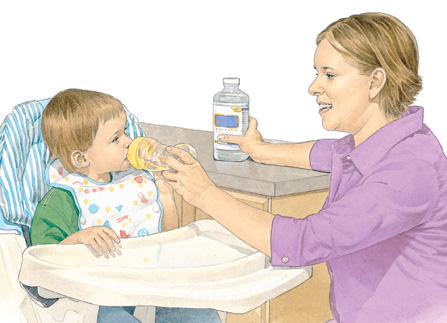
Vomiting in a child can lead to dehydration. The minerals and water lost from the body need to be replaced right away. The first step to treat vomiting and prevent dehydration is to give small amounts of fluids often.
-
Start with an oral rehydration solution. You can get this at drugstores and most groceries without a prescription. Give 1 to 2 teaspoons (5 ml to10 ml) every 1 to 2 minutes. Even if vomiting occurs, keep giving it as directed. Even while vomiting, your child will absorb most of the fluid.
-
As your child vomits less, give larger amounts of rehydration solution at longer intervals. Do this until your child is making urine and is no longer thirsty (has no interest in drinking). Don't give your child plain water, milk, formula, or other liquids until vomiting stops. It's okay for breastfeeding infants to receive breast milk in small amounts.
-
If frequent vomiting continues for more than 2 hours despite the above method, contact your child's health care provider. They may prescribe a medicine that can make the vomiting stop.
Note: Your child may be thirsty and want to drink faster, but if they are vomiting, give fluids only as directed above. The idea is not to fill the stomach with each feeding. This can cause more vomiting.
The following guidelines will help you continue to care for your child:
-
After 12 to 24 hours with no vomiting, resume solid foods. This includes rice cereal, other cereals, oatmeal, bread, noodles, mashed bananas, mashed potatoes, rice, applesauce, dry toast, crackers, soups with rice or noodles, and cooked vegetables. Give as much fluid as your child wants.
-
After 24 hours with no vomiting, resume a normal diet.
When to get medical advice
Contact your child's health care provider right away if:
-
Your child complains of severe belly (abdominal) pain.
-
Your child has a severe headache.
-
The vomit becomes bloody or bright yellow or green.
-
You are worried that your child is dehydrated.
-
Your child is too sleepy or drowsy.
-
Your child is unable to drink or eat.
-
Your child has diarrhea or vomiting that doesn't improve with treatment.
-
Your child is crying or stays fussy, and comforting them doesn't help.
-
Your child has a fever that lasts longer than 3 days.
Featured in
Online Medical Reviewer: Brittany Poulson MDA RDN CD CDE
Online Medical Reviewer: Marianne Fraser MSN RN
Online Medical Reviewer: Shaziya Allarakha MD
Date Last Reviewed: 12/01/2024
© 2000-2025 The StayWell Company, LLC. All rights reserved. This information is not intended as a substitute for professional medical care. Always follow your healthcare professional's instructions.
Personalized Pediatric Care
San Juan Health Partners Pediatrics. Dedicated to caring for your children.
Find a Doctor
Call for an Appointment
Offering personalized care at more than 20 clinics across three cities and two states.
Call NowRelated Articles
Diet For Vomiting, With or Without Diarrhea (Child Under 2 Years)
To treat vomiting and prevent dehydration, give your child small amounts of fluids at frequent intervals. Then follow these next steps.
Diet for Diarrhea Only (Infant/Toddler)
This sheet can help you care for your child who is ill with diarrhea.
Diet for Vomiting and Diarrhea (Infant/Toddler)
While vomiting and diarrhea are common in babies and toddlers, young children can quickly become dehydrated. Here are feeding instructions and signs that your child needs more care.
Treating Celiac Disease in Children
To treat celiac disease, remove all sources of gluten from your child's diet. It's important to do this even if your child is not feeling sick. Removing gluten will prevent symptoms and health problems caused by celiac disease.