When your body is working normally, the food you eat is digested and used as fuel. This fuel gives energy to the body’s cells. When you have diabetes, the fuel can’t enter the cells. If not treated, diabetes can cause serious long-term health problems.
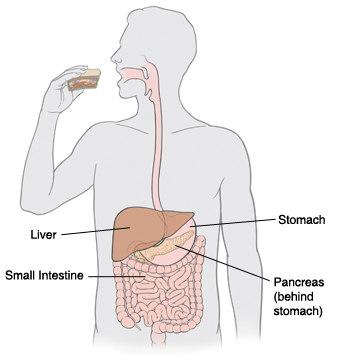
How the body gets energy
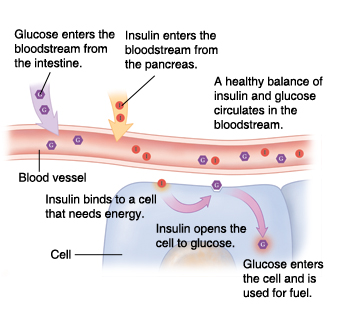
The digestive system breaks down food. This results in a sugar called glucose. Some glucose is stored in the liver. But most of it enters the bloodstream and travels to the cells. Glucose is used as fuel for energy. It needs the help of a hormone called insulin to enter the cells. Insulin is made in the pancreas. It's sent into the bloodstream. This is a response to glucose in the blood. Think of insulin as a key. When insulin reaches a cell, it attaches to the cell wall. This signals the cell to make an opening. Then glucose can enter the cell.
When you have type 2 diabetes
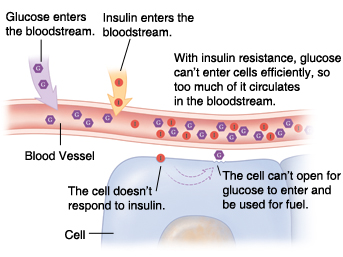
Early in type 2 diabetes, your cells don’t respond correctly to insulin. Because of this, less glucose than normal moves into cells. This is called insulin resistance. The pancreas then makes more insulin. But over time, the pancreas can’t make enough insulin to overcome insulin resistance. Less and less glucose enters cells. It builds up to a harmful level in the bloodstream. This is known as high blood sugar (hyperglycemia). The result is type 2 diabetes. The cells become starved for energy. This can make you feel tired and rundown.
Why high blood sugar is a problem
If high blood sugar isn't controlled, blood vessels all over the body become damaged. Ongoing high blood sugar affects organs, blood vessels, and nerves. This raises the risk of damage to the heart, kidneys, eyes, nerves, and limbs. Diabetes also makes other problems more dangerous. These include high blood pressure, high cholesterol, and triglycerides. Over time, people with uncontrolled high blood sugar have a greater risk of being disabled or dying from serious conditions. These include heart attack, heart failure, or stroke. They may also have problems in their eyes, kidneys, and nerves, mainly in their feet and lower legs. Many of these problems may be due to narrowing of blood vessels and poor circulation.
How daily issues affect your health
Many things in your daily life impact your health. This can include transportation, money problems, housing, access to food, and childcare. If you can’t get to medical appointments, you may not receive the care you need. When money is tight, it may be difficult to pay for medicines. And living far from a grocery store can make it hard to buy healthy food.
If you have concerns in any of these or other areas, talk with your healthcare team. They may know of local resources to assist you. Or they may have a staff person who can help.
Online Medical Reviewer: Marianne Fraser MSN RN
Online Medical Reviewer: Raymond Kent Turley BSN MSN RN
Online Medical Reviewer: Robert Hurd MD
Date Last Reviewed: 10/01/2023
© 2000-2025 The StayWell Company, LLC. All rights reserved. This information is not intended as a substitute for professional medical care. Always follow your healthcare professional's instructions.
Find the right provider to meet your needs
From primary care to specialty services and more.
Find a Doctor
Call for an Appointment
Offering personalized care at more than 20 clinics across three cities and two states.
Call NowRelated Articles
Prediabetes
You have been diagnosed with prediabetes. Read on to learn more about this condition, and how to keep it from developing into diabetes.
Diabetes: Keeping Feet Healthy
When you have diabetes, your feet need special care. Even a small foot problem can become very serious. Practice self-care to protect your feet and keep them healthy.
Peripheral neuropathy
Peripheral neuropathy is a condition that affects the nerves of the arms or legs. It causes a change in physical feeling. It may cause weakness in the muscles, tingling, numbness, or shooting pains.
Diabetes: Living Your Life
Having diabetes may mean adjustments at work and in your social life. But these changes need not keep you from succeeding at work and enjoying your leisure time.