During pregnancy, your body may not be able to make enough insulin to control your blood sugar. If this happens, you may need extra insulin. This will help control your blood sugar. In some cases, an oral antidiabetic medicine may be used. An example of this is glyburide. But insulin is used most often.
Insulin is a natural substance. It is not addictive. It does not harm your baby. It does not cross the placenta. That means it does not affect your baby the way taking a pill would. If you did not have diabetes before pregnancy, you will likely stop taking insulin after your baby is born.
Learning to use insulin
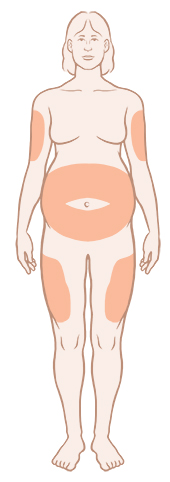
Your healthcare provider will prescribe your insulin. They will teach you how to give yourself a shot. With practice, you’ll get comfortable doing it. You will need to inject it 1 or more times a day. Insulin is injected into fatty tissue. The best site for a shot of insulin is in your belly area. But you can also do the shot in your upper arm or thigh. Talk with your healthcare provider about where to give the shot. Here are some steps to follow:
-
Choose an injection site.
-
Clean it with alcohol if the skin is dirty.
-
Pinch a fold of skin. Insert the needle at a steep angle. The best angle will depend on your body type, the length of the needle, and where you put the shot. Your healthcare provider will help you find the best angle.
-
Keeping the skin pinched, push the plunger down. This injects the insulin.
-
Release the pinched skin.
-
Remove the needle from your skin.
-
If you see blood or insulin leaking from your skin, press firmly on the site for 5 to 8 seconds.
-
Don’t rub your skin in the area.
Needles and syringes should be used only 1 time. After using, throw them away in a puncture-proof container. This is known as a sharps container. Don’t throw needles in your household trash. Talk to your healthcare provider if you have any questions or concerns about taking insulin.
Finding the right dose for you
Your healthcare provider will work with you to find the right dose of insulin for you. It may take time. This is because you need to balance your insulin with your food and exercise. And your body needs more insulin as your baby grows.
You must check your blood sugar several times a day. This is to be sure your insulin is working. If your blood sugar is too high or too low, your healthcare provider will adjust your dose.
Low blood sugar
Taking insulin puts you at risk of low blood sugar. Symptoms of low blood sugar include:
-
Shakiness
-
Dizziness
-
Weakness
-
Confusion
If you feel any of these symptoms, check your blood sugar right away.
Always treat low blood sugar quickly. To do this, eat 15 grams of fast-acting sugar, such as:
-
3 glucose tablets
-
5 to 6 pieces of hard candy
-
1 to 2 tablespoons of honey or sugar
-
½ cup fruit juice or regular, nondiet soda
-
1 cup fat-free milk
Then check your blood sugar again in 15 minutes. If your blood sugar is still low, eat another 15 grams of sugar. If your blood sugar does not return to the target range in 30 minutes, call your healthcare provider.
Online Medical Reviewer: Donna Freeborn PhD CNM FNP
Online Medical Reviewer: Heather M Trevino BSN RNC
Online Medical Reviewer: Irina Burd MD PhD
Date Last Reviewed: 12/01/2022
© 2000-2025 The StayWell Company, LLC. All rights reserved. This information is not intended as a substitute for professional medical care. Always follow your healthcare professional's instructions.
Find the right provider to meet your needs
From primary care to specialty services and more.
Find a Doctor
Call for an Appointment
Offering personalized care at more than 20 clinics across three cities and two states.
Call NowRelated Articles
Diabetes: Activity Tips
Being more active can help you manage your diabetes. The tips on this sheet can help you get the most from your exercise--and also help you stay safe.
Oral Medicines for Type 2 Diabetes
Diabetes pills can help to manage your blood sugar. These pills are not insulin. They work to manage your blood sugar in several ways. Read on to learn about the different types of pills for type 2 diabetes.
Checking Ketones
Here are images showing how to treat high blood sugar when you have diabetes.
Diabetes: Inspecting Your Feet
Diabetes increases your chances of developing foot problems. So inspect your feet every day. This helps you find small skin irritations before they become serious infections.