Lifestyle changes are the key to preventing tension-type headaches. Learn what changes in your environment and daily activities can prevent the strain and tension that lead to headaches. If emotional stress is a factor, stress reduction may bring relief. Other lifestyle changes can help keep you healthier and better able to cope with pain.
What can cause tension headaches?
Causes of tension-type headaches include:
-
Posture and movement. Your posture while you sit, work, drive, and even sleep can put stress on your shoulders and neck. This can tighten muscles in the back of your head, causing headaches.
-
Lifting and carrying. These can cause strain on your back and neck, especially if you carry too much weight, carry weight unevenly, or use poor lifting technique.
-
Certain sports. Activities that involve jumping, running, and sudden starts, stops, or changes of direction can jar your neck and head. This may lead to tight muscles and pain. Weightlifting and other activities that require upper body strength can lead to tight neck and shoulder muscles.
-
Jaw tension. Clenching your jaw or grinding your teeth can result in tension and pain. This may happen while you sleep without your knowing it.
-
Eye problems. Eyestrain can cause tension in the muscles around the eyes. Or a problem with your eyeglass prescription can make you hold your head at an awkward angle. This can cause neck strain and headaches.
-
Emotional stress. Many factors lead to emotional stress: overwork, family problems, money problems, or sudden life changes. This may cause muscle tension.
What you can do
Once you know what’s causing your headaches, you can work to prevent them. You may need to seek professional help to make some of the needed changes.
-
Posture and movement changes. Change the setup of your workspace and car. Learn and maintain good posture. Avoid positions that strain your neck or shoulders. Make sure your bedding and pillows provide good support. Avoid sleeping on couches, chairs, or floors when a bed is available.
-
Lifting and carrying. Learn good lifting technique. Make sure to use the proper tools and equipment for lifting.
-
Change your sport. Switch to a low-impact sport. To help relieve stress on your neck and head, cut back on activities that trigger your headaches.
-
Dental work. See your dentist if you think your headaches are caused by jaw tension or teeth grinding.
-
New eyewear. Buy an extra pair of glasses adjusted for reading or working at a computer. This helps to reduce eyestrain and keep your neck at a comfortable angle.
-
Stress management. Learn techniques for relaxing and reducing emotional stress, like deep breathing, visualization, progressive relaxation, and biofeedback. Regular sleep habits can also help to control stress.
-
Regular sleep and meals. It's important to have a regular sleep cycle and to avoid skipping meals.
-
Smoking and Alcohol. Avoid smoking and excess alcohol use.
-
Track headaches. Keep a diary of your headaches to share with your healthcare provider. This may help you identify triggers for your headaches.
Exercise can help
Exercise can improve overall health and help you to relax.
-
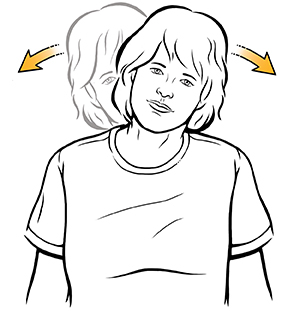
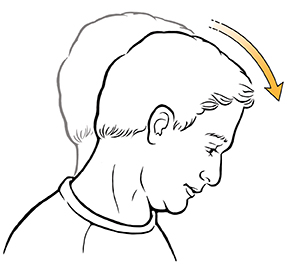
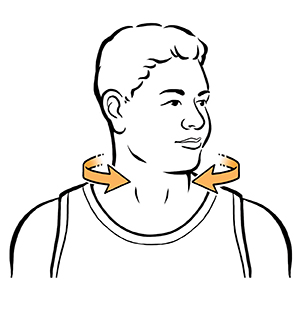
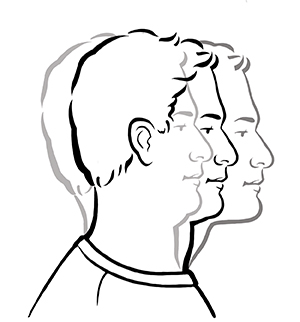
Neck exercises help keep your neck muscles relaxed during the day. Try the neck exercises shown on this sheet. Start in a neutral (relaxed, centered) position. Do 3 repetitions every 2 to 4 hours throughout the day. Don't do these movements quickly or hyper-flex or hyper-extend your neck. Stop right away if you have pain.
-
Low-impact aerobic exercise helps keep your muscles strong and flexible. This helps prevent tension and the pain it causes.
-
Stretching, tai chi, and yoga help keep your muscles flexible. They may also help relieve emotional stress.
Lower your left ear toward your left shoulder. Return to neutral. Repeat on the right side.
Lower your chin to your chest and slowly return to neutral.
Look to the left. Return to neutral. Then look to the right.
Move your head forward and back while keeping the top of your head level.
Online Medical Reviewer: Anne Fetterman RN BSN
Online Medical Reviewer: Heather M Trevino BSN RNC
Online Medical Reviewer: Joseph Campellone MD
Date Last Reviewed: 09/01/2024
© 2000-2025 The StayWell Company, LLC. All rights reserved. This information is not intended as a substitute for professional medical care. Always follow your healthcare professional's instructions.
Find the right provider to meet your needs
From primary care to specialty services and more.
Find a Doctor
Call for an Appointment
Offering personalized care at more than 20 clinics across three cities and two states.
Call NowRelated Articles
Preventing Migraine Headaches: Triggers
The first step in preventing migraines is to learn what set them. off. You may then be able to control your triggers to prevent or reduce the severity of your migraines.
Preventing Migraine Headaches: Medicines and Lifestyle Changes
A migraine is a type of severe headache. Having a migraine can be very painful. But there are steps you can take to help prevent migraines.
Understanding Cerebral Angiography
This test makes X-ray images of blood vessels in your brain. It is used to help your doctor find problems with those blood vessels.
Understanding Sympathectomy
A sympathectomy is a procedure to cut or block a nerve. It's done to treat problems such as severe sweating (hyperhidrosis) and severe facial blushing. Learn more about the procedure here.