Healthy Living
Get Your Z’s to Control Your COPD

December 2022
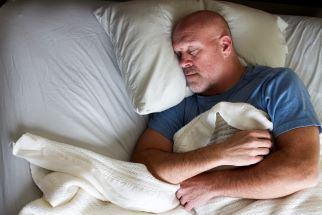
How you slept last night affects more than your mood or the dark circles under your eyes. If you have chronic obstructive pulmonary disease (COPD), your snoozing status may reveal a lot about your risk for a flare-up.
What’s the connection?
Health experts already knew many people with COPD—about 75%—have symptoms at night that may disrupt sleep. And according to a new study, poor sleep quality is, in turn, linked to the risk for flare-ups of your COPD.
These episodes are called exacerbations. When they occur, it’s even harder than usual to breathe. You may cough and your mucus may increase. You might get very sick and even have to go to the emergency room or hospital.
Other effects of tossing and turning
Poor sleep harms many aspects of your health, raising your risk for heart disease, stroke, and dementia. What’s more, a lack of slumber also hampers your immune system, increasing your odds for infection. That’s a double whammy, since respiratory illnesses can trigger COPD flares.
Get a better night’s rest
These tips can help you drift off to dreamland, so you stay healthier while living with COPD:
-
Commit to a schedule. Try to go to bed around the same time each night and get up at the same hour in the morning, including on weekends.
-
Try a new position. Some studies suggest raising your head and back 30 degrees above the rest of your body improves sleep. Studies are ongoing to determine how well this works for people with lung disease. Check with your health care team about what’s best for you.
-
Stick to your treatment plan. The better controlled your COPD, the lower your risk for flare-ups. If you’ve been prescribed a continuous positive airway pressure (CPAP) machine for nighttime, make sure you’re using it regularly.
-
Ditch cigarettes. Quitting smoking is one of the best ways to slow the progression of COPD. And another new study suggests kicking the habit can also reduce the risk for insomnia.
If you still struggle to sleep, talk with your healthcare provider. They can provide further testing—and advice for sound slumber.
Online Medical Reviewer: Brian McDonough, MD
Online Medical Reviewer: Ray Turley, MSN, BSN
Date Last Reviewed: 09/01/2022
© 2000-2025 The StayWell Company, LLC. All rights reserved. This information is not intended as a substitute for professional medical care. Always follow your healthcare professional's instructions.
Find the right provider to meet your needs
From primary care to specialty services and more.
Find a Doctor
Call for an Appointment
Offering personalized care at more than 20 clinics across three cities and two states.
Call NowRelated Articles
4 Ways to Boost Heart Health if You Have Diabetes
When you’re diagnosed with type 2 diabetes, heart health matters—a lot. You’re twice as likely to have heart disease or a stroke than someone who doesn’t have the condition.
Maximizing Your Teaching Moments
During each clinical encounter, there are moments that arise naturally as ideal "teaching moments." Here's a quick summary of how to apply the ideas to a typical patient encounter to build trust and compliance.
Positive Aging: The Happy, Healthy Way to Grow Older
The world turns, and so do the pages of the calendar. Aging is inevitable, so why not make the most of it?
Dealing With the Stress of Self-Isolation
You're staying home, but you feel lonely, stressed and anxious. Let's look at some simple ways to manage self-isolation.